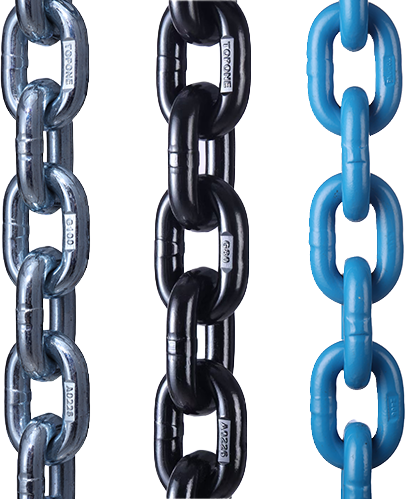
For any procurement manager or engineer responsible for lifting operations, the choice of a hoist chain is far more than a simple line item on a purchase order. It is a critical decision that directly impacts operational safety, efficiency, and profitability. A chain failure can lead to catastrophic consequences, including equipment damage, production downtime, and, most importantly, severe injuries or fatalities. Yet, the market is flooded with chains of varying quality, making it difficult to distinguish a reliable product from a potential liability.
This is where the EN 818-7 standard comes in. It is not just another technical document; it is a comprehensive framework designed to address the most pressing pain points of hoist chain buyers. This article will explain how understanding this standard can empower you to make smarter, safer purchasing decisions.
The Buyer's Dilemma: Common Pain Points in Hoist Chain Procurement
Before we delve into the specifics of the standard, let's acknowledge the common challenges that buyers face:
Safety Uncertainty: How can you be sure that a chain will perform under load without failing? What does "safe" really mean?
Quality Inconsistency: Why do some chains wear out prematurely while others last for years? How can you guarantee consistent quality across batches?
Compatibility Issues: Will this new chain work smoothly with our existing hoists, or will it cause jams and excessive wear on the sprockets?
Durability Concerns: How can we be sure the chain will withstand the harsh conditions of our industrial environment?
These are not trivial questions. They represent significant risks to your operation. The EN 818-7 standard was created to provide clear, verifiable answers to all of them.
How EN 818-7 Solves Your Biggest Problems
The EN 818-7 standard is your best insurance against hoist chain failure because it establishes a strict, evidence-based system for manufacturing and testing. Let's break down how it directly addresses your pain points.
1. Eliminating Safety Uncertainty with Verifiable Proof
Your concern about safety is valid. The term "safe" is meaningless without a quantifiable definition. EN 818-7 provides this through two mandatory requirements:
A Minimum 4:1 Safety Factor: This means the chain's certified minimum breaking force (MBF) must be at least four times its stated Working Load Limit (WLL). This provides a crucial buffer against unexpected shock loads and dynamic forces.
100% Proof Load Testing: This is arguably the most critical safety guarantee. Every single link of every chain is tested to 2.5 times its WLL before it leaves the factory. This non-destructive test is designed to expose any hidden material defects or welding flaws that could lead to failure under normal use. Any chain that shows any sign of deformation is immediately scrapped. There are no second chances.
What this means for you: When you purchase an EN 818-7 compliant chain, you are not just trusting a brand's reputation. You are buying a product where every single link has been physically tested to withstand forces far exceeding its normal operating load.
2. Ensuring Quality Consistency Through Strict Material and Process Control
Your experience with inconsistent quality is a common problem, often stemming from a lack of control over raw materials and manufacturing processes. EN 818-7 tackles this by referencing other standards, creating a chain of quality that starts at the steel mill.
Material Foundation (DIN 17115): The standard mandates that the raw material must comply with DIN 17115, which specifies the use of fully killed, fine-grain alloy steel. It also sets strict limits on impurities like sulfur and phosphorus and requires the addition of specific alloying elements (Cr, Ni, Mo) and aluminum to ensure strength, toughness, and resistance to embrittlement.
Manufacturing Process (EN 818-1): The manufacturing process itself is governed by EN 818-1, which covers everything from welding parameters to heat treatment (quenching and tempering). This ensures that the raw material's potential is fully realized in the final product.
What this means for you: An EN 818-7 chain is the product of a fully documented and controlled process. The quality is not accidental; it is engineered and verified at every step, from the chemical composition of the steel to the final heat treatment.
3. Solving Compatibility Issues with Fine Tolerance and Application-Specific Types
A hoist chain that doesn't fit the sprocket perfectly is a recipe for disaster. It can cause jamming, chain slippage, and accelerated wear on both the chain and the hoist. EN 818-7 addresses this with its "fine tolerance" requirement and a clear classification system.
Fine Tolerance: The standard specifies extremely tight dimensional tolerances for the chain's pitch (the distance between links). This precision ensures that the chain meshes perfectly with the hoist's sprocket, allowing for smooth, high-speed operation without vibration or jamming.
Application-Specific Types (T, DAT, DT): EN 818-7 recognizes that not all hoists are the same. It defines three types of chains, which share the same breaking strength but differ in surface hardness to suit different applications:
| Type | Typical Hardness (HV10) | Primary Application |
|---|
| T | 360 | Manual Hoists (slower speed, less wear) |
| DAT | 500 | Standard Electric Hoists |
| DT | 550 | High-Speed Electric Hoists (highest wear resistance) |
What this means for you: You can select the exact type of chain that matches your equipment's requirements, guaranteeing compatibility and optimizing performance and service life. No more guesswork.
Conclusion: Making an Informed Decision
Choosing a hoist chain should not be a leap of faith. It should be a calculated decision based on verifiable evidence. The EN 818-7 standard provides the framework for this evidence.
When you specify an EN 818-7 compliant chain, you are not just buying a piece of hardware. You are investing in a comprehensive safety and quality assurance system that addresses your most critical concerns. You are choosing a product that has been:
Designed for a 4:1 safety factor.
Individually proof-tested to 2.5 times its working load.
Made from strictly controlled alloy steel.
Manufactured with precise dimensional accuracy.
Engineered for your specific application.
Next time you are sourcing hoist chains, don't just look at the price. Ask for the EN 818-7 certificate. Ask for the proof load test report. By doing so, you ar