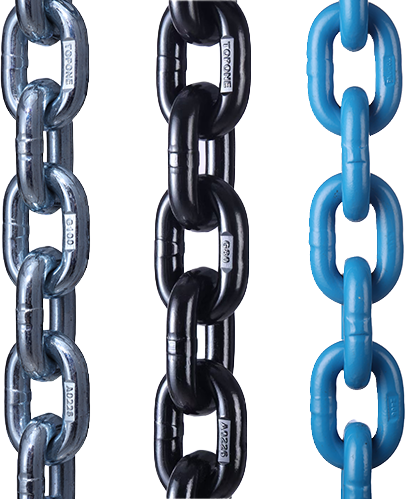
When people search for what is the maximum temperature alloy steel chain slings, they are usually dealing with a real operational concern. A chain sling may be strong under normal conditions, but elevated temperature directly affects its mechanical properties and safe working limits.
So the key question is:
What is the maximum temperature most alloy steel chain slings can safely operate at?
According to international lifting standards and established industry practice, most alloy steel chain slings are rated for continuous use up to approximately 200°C (392°F) without reduction of working load limit.
Beyond this temperature, capacity reductions or removal from service may be required, depending on exposure level.
Why Temperature Matters for a Chain Sling
A chain sling relies on carefully controlled metallurgical properties created through alloy composition and heat treatment. High temperatures can:
Reduce tensile strength
Lower yield strength
Affect fatigue resistance
Accelerate wear and elongation
Cause microstructural changes in the steel
Because chain slings are used for overhead lifting, any loss of strength is a serious safety concern.
Temperature Limits Defined by Chain Sling Standards
Major international standards provide clear guidance on chain sling temperature limits:
EN 818 (Europe)
ISO 3077 (International)
ASME B30.9 (USA)
These standards generally agree on the following principle:
Alloy steel chain slings are suitable for use up to 200°C without reduction in working load limit.
Above this temperature, load reductions or withdrawal from service apply.
This guidance is based on well-established metallurgical behavior of quenched and tempered alloy steels.
Typical Temperature Ranges for Alloy Steel Chain Slings
Up to 200°C (392°F)
Normal rated Working Load Limit (WLL) applies
No reduction required
Standard inspection intervals
This range covers most industrial lifting environments.
Between 200°C and 300°C (392–572°F)
Reduced WLL is required
Increased inspection frequency recommended
Prolonged exposure may shorten chain sling service life
At these temperatures, alloy steel begins to lose measurable strength.
Above 300°C (572°F)
Chain sling must not be used
Risk of permanent metallurgical damage
Chain may require removal from service even after cooling
High-temperature exposure can alter the heat-treated structure of the chain sling permanently.
How Temperature Affects Alloy Steel in a Chain Sling
Alloy steel chain slings are heat treated through quenching and tempering. This process provides:
High strength
Controlled hardness
Impact resistance
Excessive heat can reverse or damage this heat-treated structure, causing:
Softening of the steel
Reduced load-bearing ability
Increased elongation under load
Once this occurs, strength loss may not be visible—but it is real.
Visible Signs of Overheating in a Chain Sling
Operators should be aware of warning signs that a chain sling may have been exposed to excessive temperature:
Discoloration (blue, brown, or black oxide colors)
Scaling or surface flaking
Loss of markings due to heat
Abnormal elongation during inspection
Any of these signs require immediate inspection and likely removal from service.
Chain Sling Temperature vs Application Environment
High-temperature risks often arise in applications such as:
Foundries
Steel mills
Welding areas
Hot forging facilities
Near furnaces or molten materials
In these environments, chain sling selection and inspection procedures must account for thermal exposure, not just load weight.
A Practical Industry Observation (Non-Promotional)
In many lifting incidents related to heat exposure, failure occurs not during the hot operation—but later, when the chain sling is reused at normal temperature. Heat damage may not be obvious, yet strength can already be compromised.
This is why standards treat high-temperature exposure as a material integrity issue, not just an operational one.
When a Chain Sling Must Be Removed from Service Due to Temperature
A chain sling should be removed from service if:
Exposure exceeds recommended temperature limits
Surface discoloration or scaling is observed
Load reductions cannot be reliably applied
Certification markings are damaged by heat
Temperature-related damage should never be ignored or assumed reversible.
Final Answer: Maximum Temperature for Alloy Steel Chain Slings
To clearly answer the question:
Most alloy steel chain slings are rated for use up to approximately 200°C (392°F) at full working load limit.
Above this temperature:
Load reductions apply
Service life is reduced
Removal from service may be required
Understanding and respecting chain sling temperature limits is essential for safe and compliant lifting operations.