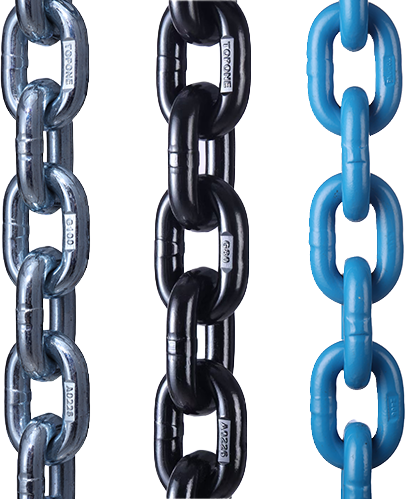
Corrosion is one of the most common causes of reduced service life for lifting chains. Moisture, salt, chemicals, dust and improper storage can gradually damage the chain surface, accelerate wear and affect the performance of both the chain and its load-bearing components.
Proper lifting chain lubrication is one of the most effective ways to protect alloy steel lifting chains during storage. A suitable lubricant forms a protective film that helps isolate the steel from moisture and contaminants while reducing metal-to-metal contact when the chain returns to service.
Whether the chain is used in construction, manufacturing, offshore lifting or marine engineering, correct cleaning, lubrication and storage should always be part of routine maintenance.
A practical storage procedure is:
Inspect → Clean → Dry → Lubricate → Store → Reinspect Before Use
Following this sequence helps reduce corrosion, preserves surface condition and extends the service life of Grade 80 and Grade 100 lifting chains.
Why Proper Storage Matters
A lifting chain is manufactured from high-strength alloy steel and receives controlled heat treatment to achieve the required combination of strength, toughness and fatigue resistance. Grade 80 chains are commonly produced from 20Mn2 alloy steel, while Grade 100 chains typically use 23MnCrNiMo5-4 (DIN 1.6758), whose higher chromium, nickel and molybdenum content improves hardenability and mechanical performance after quenching and tempering.
Although these materials provide excellent mechanical properties, they are not corrosion-proof. Without proper protection, moisture and contaminants can attack the steel surface during storage.
Corrosion can result in:
Surface rust
Pitting
Increased wear between links
Reduced flexibility
Difficult inspections
Shortened service life
Good storage practices help preserve the chain in the same condition as when it left service.
Why Lifting Chain Lubrication Is Essential
Many users clean a chain before storage but forget to lubricate it.
Cleaning removes dirt, moisture and old contaminants, but it also removes much of the protective film that previously covered the steel surface.
Applying a suitable lubricant after cleaning provides several benefits:
Helps prevent moisture from reaching the steel
Reduces oxidation during storage
Protects contact areas between adjacent links
Improves flexibility after long storage periods
Makes future inspections easier by reducing corrosion buildup
Lubrication is particularly important for Grade 80 and Grade 100 lifting chains because their precision-manufactured surfaces and calibrated dimensions should be protected throughout their service life.
The lubricant should be applied after the chain has been completely cleaned and dried so that moisture is not trapped beneath the protective coating.
How to Store Lifting Chains Correctly
Proper storage begins immediately after the chain is removed from service.
First inspect the chain for wear, elongation, bent links, cracks or damaged components. Any chain that requires repair or removal from service should be identified before storage.
Next, clean the chain to remove dirt, grease, salt, chemicals and other contaminants. After cleaning, dry the chain thoroughly before applying lubricant.
Once lubricated, store the chain:
In a clean and dry indoor environment
Away from direct rain and standing water
Away from corrosive chemicals
Off the ground where moisture can accumulate
Protected from excessive dust and contamination
Where possible, chain slings should be suspended from dedicated storage racks rather than piled together. Proper storage reduces unnecessary contact between components and makes routine inspections easier.
Storage Conditions for Marine and Industrial Applications
Chains used in offshore, port and marine environments require additional attention because salt spray and humidity significantly increase the risk of corrosion.
For these applications, storage should include:
More frequent cleaning
Regular inspection of protective lubricant
Controlled indoor storage where possible
Protection from salt contamination before long-term storage
Products intended for marine lifting are commonly manufactured to meet international standards and may be supplied with certifications such as BV, DNV, ABS or LR, depending on customer requirements. While certification verifies manufacturing and quality requirements, proper lubrication and storage remain essential for maintaining the chain during service.
Inspection Before Returning the Chain to Service
Storage does not eliminate the need for inspection.
Before a lifting chain is used again, verify:
Chain identification
Surface condition
Lubrication condition
Corrosion or pitting
Wear and elongation
Hooks and master links
WLL identification
If heavy corrosion, deformation or other unacceptable damage is found, the chain should be evaluated according to the manufacturer's inspection requirements before being returned to lifting service.
Best Practices for Lifting Chain Lubrication
Effective lubrication is not simply applying more oil.
The objective is to create a thin, continuous protective film that reaches the contact areas between adjacent links without attracting excessive dirt.
The maintenance sequence is:
Clean → Dry → Apply Lubricant → Remove Excess → Store in a Dry Environment
Combined with routine inspections and proper storage, this approach helps maintain the performance of Grade 80 and Grade 100 lifting chains while reducing corrosion during periods of inactivity.
For lifting chains used in demanding industrial or marine environments, regular lubrication should be considered an essential part of preventive maintenance rather than an optional step.