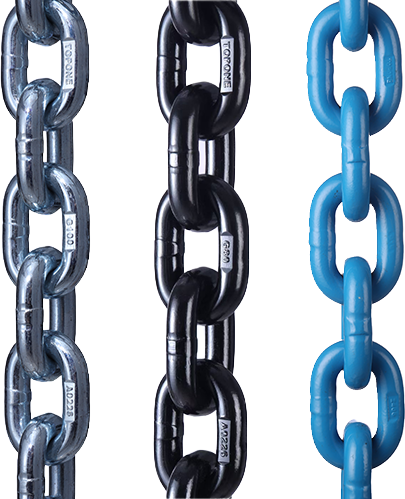
A chain block can safely lift loads up to its marked Working Load Limit (WLL), provided the equipment is in suitable condition and used within the manufacturer's operating requirements. A 2-ton chain block, for example, is rated to lift a maximum suspended load of 2 metric tons under its specified conditions.
However, the chain block's rating alone does not guarantee a safe lift. The supporting structure, lifting accessories, load position, and equipment condition must also be considered.
What Does Chain Block WLL Mean?
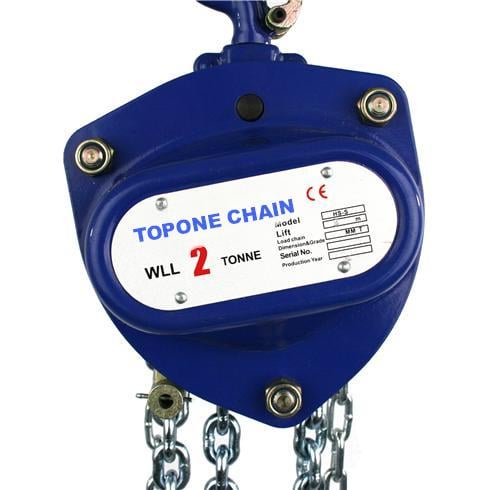
Chain block WLL (Working Load Limit) refers to the maximum load a chain block is rated to lift during normal operation under specified conditions.
The WLL is normally displayed on the equipment nameplate or load block, often alongside the model number, lifting height, and manufacturer information.
For example:
1 Ton WLL: Maximum rated load of 1,000 kg
2 Ton WLL: Maximum rated load of 2,000 kg
5 Ton WLL: Maximum rated load of 5,000 kg
These examples assume metric tonnes. Always verify the units shown on the equipment.
The WLL must not be exceeded, even if the chain block appears capable of lifting a heavier load.
WLL vs. Breaking Load vs. Proof Load
Three load ratings are often confused when evaluating lifting equipment.
Term | Meaning | Practical Significance |
Working Load Limit (WLL) | Maximum permitted working load under specified conditions | Determines the normal operating load limit |
Proof Load | Specified load applied during a controlled verification test | Helps verify equipment performance; not an operating limit |
Breaking Load | Load at which a component fails during destructive testing | Indicates ultimate strength; not a safe working capacity |
Does a Higher Breaking Load Mean a Higher WLL?
Not necessarily.
Breaking strength and working load limit are different engineering values. The rated capacity of a complete chain block depends on its approved design, load chain, gears, hooks, brake system, and other load-bearing components.
A chain block must never be operated above its marked WLL simply because its components have higher breaking strengths.
Similarly, successful proof-load testing does not authorize lifting above the rated capacity during normal operation.
Chain Block WLL Chart: Common Rated Capacities
The following chart illustrates common nominal capacities used for manual chain blocks.
Chain Block Rating | Maximum Rated Load |
0.5 Ton | 500 kg |
1 Ton | 1,000 kg |
1.5 Ton | 1,500 kg |
2 Ton | 2,000 kg |
3 Ton | 3,000 kg |
5 Ton | 5,000 kg |
10 Ton | 10,000 kg |
Note: These are nominal rating conversions, not verified specifications for a particular TOPONE model. Available capacities and operating restrictions depend on the manufacturer and product series.
The actual suspended load must remain within the chain block's WLL and the rated capacity of every relevant component in the lifting system.
What Can Affect Safe Lifting Capacity?
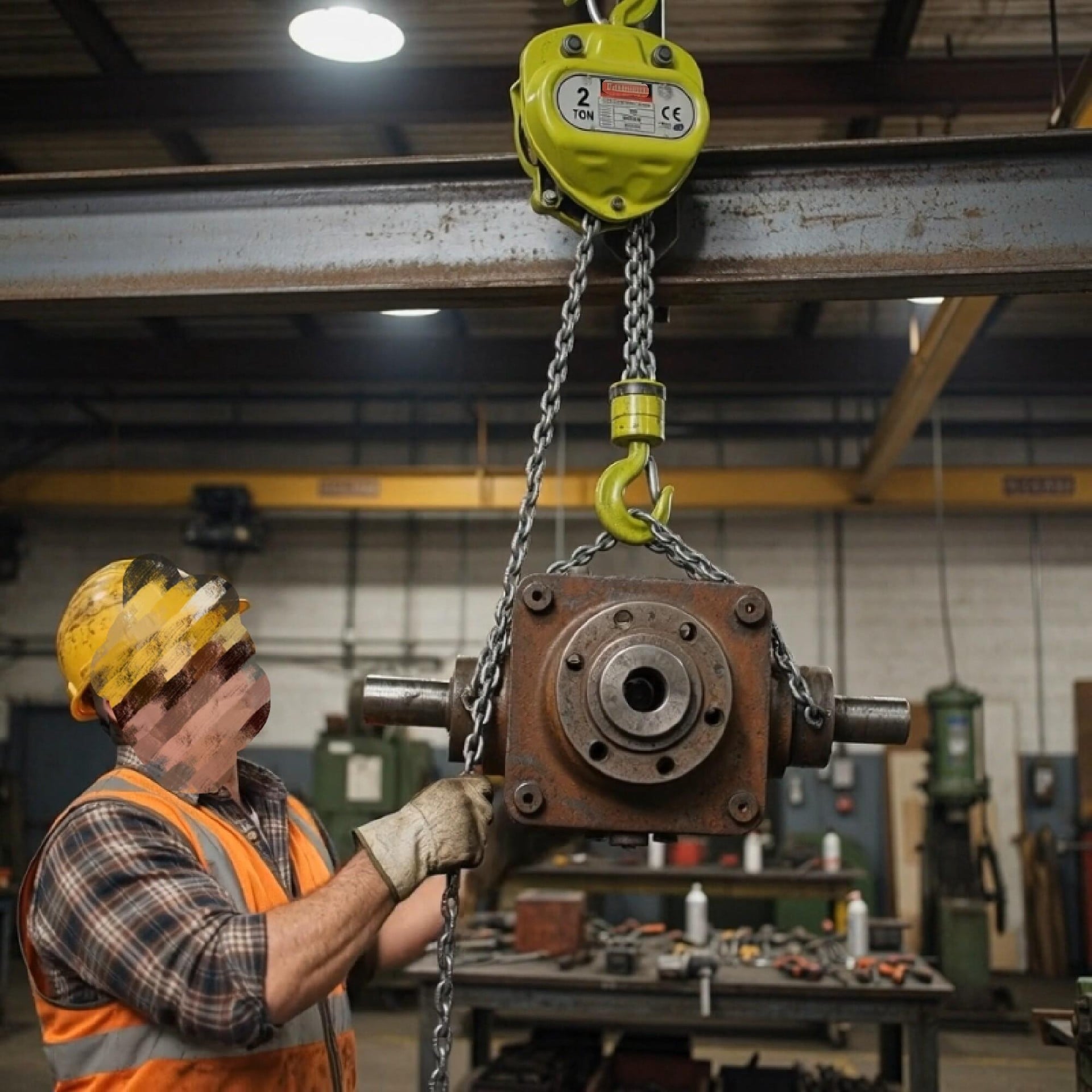
Even when a chain block has a clearly marked WLL, several operating conditions can make a lifting arrangement unsafe.
1. Supporting Structure and Lifting Accessories
The beam, trolley, suspension point, slings, and shackles must all be suitable for the forces imposed during lifting.
A 5-ton chain block does not make a supporting beam rated for 3 tons capable of lifting 5 tons.
The complete arrangement must be evaluated according to its lowest applicable capacity and actual loading conditions.
2. Side Loading and Incorrect Load Position
Chain blocks are generally intended for lifting with the load properly aligned beneath the hoist.
Side pulling can introduce unintended forces into the hooks, housing, and supporting structure. Avoid angled loading unless the manufacturer explicitly approves the configuration.
3. Worn or Damaged Components
Damaged load chains, deformed hooks, malfunctioning brakes, or excessive wear can make a chain block unsafe even when the load is below its WLL.
Inspect the equipment before use and remove defective units from service until they have been properly evaluated.
How to Check a Chain Block's WLL Before Lifting
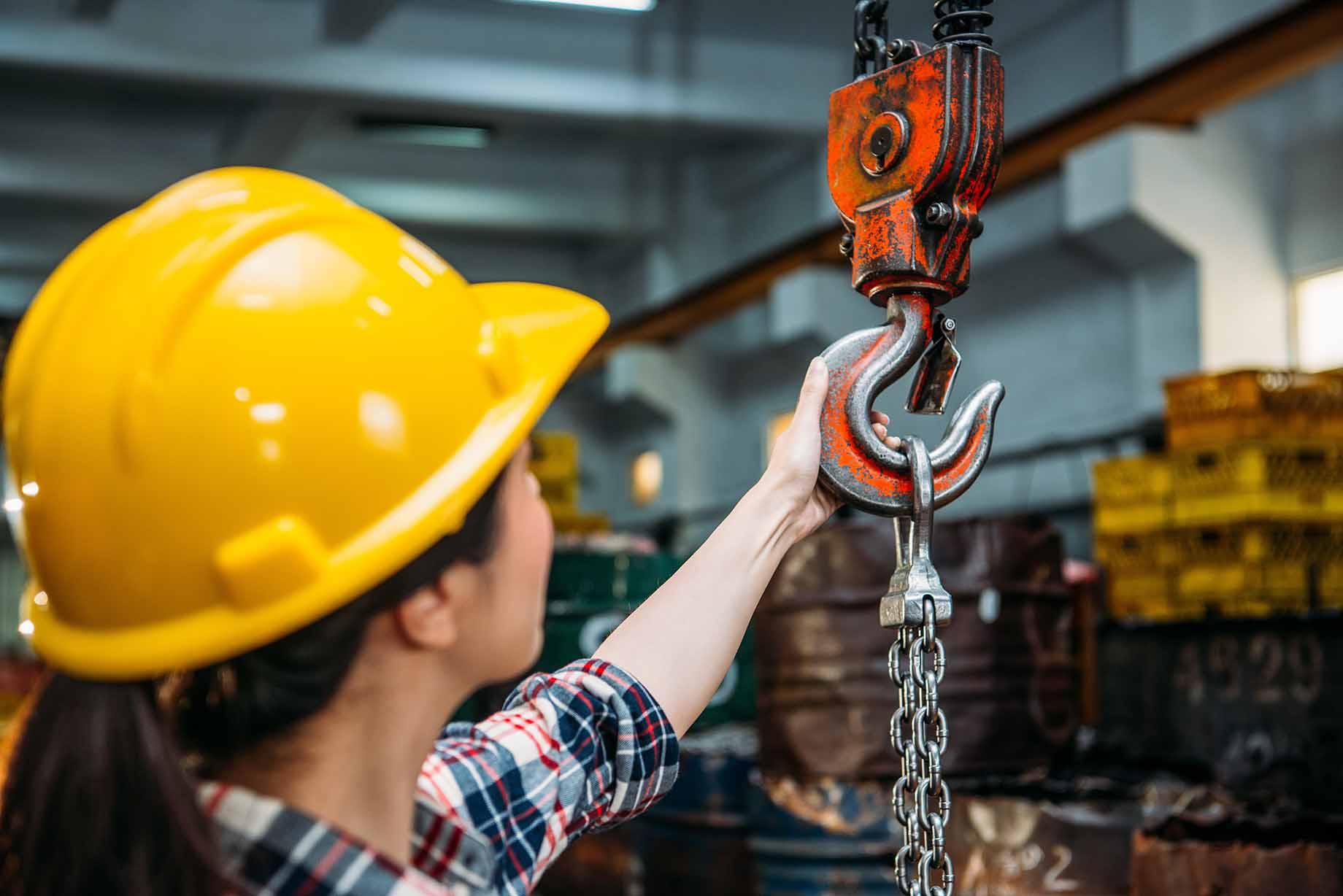
Before operating a manual chain block, follow these essential checks:
1. Read the capacity marking. Confirm the WLL and its units on the nameplate or load block.
2. Determine the suspended weight. Include the load and any below-the-hook lifting accessories.
3. Check the complete lifting arrangement. Verify the supporting structure, suspension components, and rigging capacities.
4. Inspect the chain block. Check the load chain, hooks, safety latches, brake operation, and visible damage.
5. Confirm correct alignment. Position the hoist and load according to the manufacturer's instructions.
6. Perform a controlled initial lift. Raise the load slightly in a clear area to confirm proper balance and load control before continuing.
Never use a chain block with missing or illegible capacity markings unless its rating has been positively established through an approved identification process.
Related Chain Block Products and Selection Guides
Understanding WLL is the first step toward selecting suitable lifting equipment.
For information about available chain block configurations and technical specifications, visit TOPONE's Chain Block product and technical overview.
For a detailed explanation of how to determine the required rated capacity, read our Chain Block Capacity Selection Guide.
You can also learn how vertical travel affects equipment selection in How to Choose the Right Lifting Height for a Chain Block.
Frequently Asked Questions
Can a 2-ton chain block lift more than 2 tons?
No. A 2-ton chain block must not lift more than its marked rated capacity during normal operation, even if it has passed a higher proof-load test.
Is chain block WLL the same as safe working load?
The terms WLL and Safe Working Load (SWL) are sometimes used similarly, but terminology depends on the applicable standard and equipment documentation. Always follow the manufacturer's marked rated capacity.
Does lifting height affect chain block WLL?
A longer lifting height does not automatically increase or decrease the marked WLL. The complete configuration must still be approved for its specified load and lift.
Conclusion
Chain block WLL defines the maximum rated load permitted under the manufacturer's specified operating conditions. It is not the breaking strength or proof-test load.
Safe lifting requires more than checking the hoist's capacity. Operators must also verify the total suspended weight, supporting structure, lifting accessories, equipment condition, and correct operating setup.
For chain block selection or lifting equipment requirements, contact TOPONE with your intended load, lifting height, and application details.