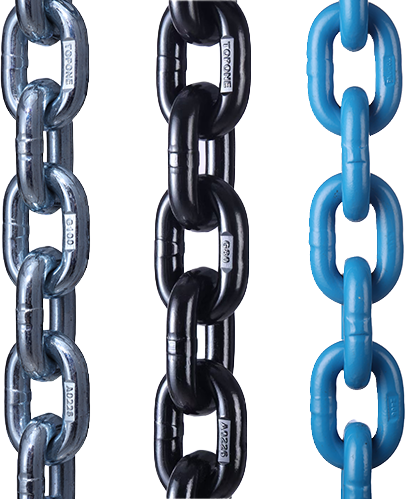
When selecting a lifting chain, the most important number is not the chain diameter or grade—it is the Working Load Limit (WLL). The WLL tells you the maximum load that a lifting chain or chain sling is rated to lift under specified operating conditions.
Many buyers confuse WLL with breaking strength, assuming a chain can safely lift any load below its ultimate strength. In reality, lifting equipment is designed with a substantial safety margin, and the WLL represents the safe operating limit—not the point where the chain fails.
Understanding lifting chain WLL helps you choose the correct chain size, compare Grade 80 and Grade 100 chains correctly, and avoid dangerous overloading.
The practical selection process is:
Maximum Load → Required WLL → Chain Grade → Chain Diameter → Sling Configuration → Working Conditions
This guide explains what WLL means, how it is determined, and how to use it when selecting lifting chains.

What Is WLL in a Lifting Chain?
Working Load Limit (WLL) is the maximum load that a lifting chain or complete chain sling is designed to lift safely during normal operation when used according to the manufacturer's instructions and applicable standards.
The WLL is a rated working capacity, not the maximum force the chain can physically withstand before breaking.
This distinction is critical.
For example, a chain with a 2-ton WLL is not expected to break at 2 tons. Instead, it has been designed, manufactured, and tested with a significant safety margin between its rated working load and its minimum breaking strength.
Every lifting chain should be identified by more than its diameter. A proper specification includes:
Chain diameter
Working Load Limit (WLL)
Manufacturer identification
Applicable standard
When selecting lifting equipment, the WLL of the complete assembly—not just the chain—should always be used.
WLL vs Breaking Strength: What Is the Difference?
One of the most common misunderstandings is treating WLL and breaking strength as the same value.
They are not.
Breaking strength (often called Minimum Breaking Force or MBL) is the minimum force at which a chain is expected to fail during destructive testing.
WLL is the safe operating limit for everyday lifting.
Term | Meaning |
WLL | Safe rated lifting capacity |
Minimum Breaking Force | Minimum force at which failure occurs during testing |
Safety Margin | Difference between working load and breaking load |
This safety margin exists because lifting equipment must account for real operating conditions such as dynamic loading, positioning errors, slight impacts, manufacturing tolerances, wear over time, and environmental influences.
For this reason, operators should never use breaking strength as a working capacity.
The correct reference for lifting operations is always the rated WLL.
How Is Lifting Chain WLL Determined?
A lifting chain's WLL is not chosen arbitrarily. It is established through engineering design, material properties, manufacturing control, testing, and applicable product standards.
Several factors work together to determine the final rated capacity.
Chain Grade
Chain grade is one of the largest influences on WLL.
Grade 80 and Grade 100 lifting chains are both high-strength alloy steel products used for overhead lifting, but they belong to different strength classes.
Within comparable standardized lifting-chain systems, Grade 100 can provide approximately 25% higher WLL than Grade 80 at the same nominal diameter.
However, grade alone does not determine the final rating.
Chain Diameter
Diameter directly affects the amount of material available to carry the load.
In general, increasing diameter increases the chain's load-carrying capability.
Common lifting chain diameters include:
6 mm, 7 mm, 8 mm, 10 mm, 13 mm, 16 mm, 20 mm, 22 mm and larger sizes.
The same diameter should not automatically be assumed to have one universal WLL because grade also affects the rating.
Material Properties
High-strength alloy steel provides the mechanical properties needed for lifting chains.
The material must achieve an appropriate combination of:
Strength
Toughness
Hardness
Fatigue resistance
These properties are developed through controlled manufacturing and heat treatment.
Manufacturing Quality
The manufacturing process also affects WLL.
A typical lifting-chain production sequence includes:
Material Inspection → Link Forming → Flash Butt Welding → Calibration → Quenching & Tempering → Testing → Final Inspection
Consistent welding quality, dimensional accuracy, and heat treatment all contribute to the final rated capacity.
Applicable Standards
The WLL assigned to a lifting chain depends on the applicable standard and product system.
For example:
EN 818 series
ASME B30.9
Applicable regional lifting regulations
Manufacturers determine the rated WLL according to the requirements of the applicable standard for that product.
The Role of Safety Factor in WLL
One of the most important concepts behind lifting chain WLL is the design factor (often called the safety factor).
The design factor creates a margin between the rated working load and the minimum breaking strength.
For example, many alloy steel lifting chains used in chain slings are designed with a minimum design factor of 4:1, meaning the minimum breaking strength is at least four times the rated WLL.
The relationship is:
Minimum Breaking Force≥4×WLL
This does not mean operators should intentionally approach the breaking load.
Instead, the design factor provides additional protection against normal operating uncertainties.
For example:
WLL | Minimum Breaking Force (4:1 example) |
1 t | 4 t |
2 t | 8 t |
3 t | 12 t |
5 t | 20 t |
These values illustrate the relationship rather than replacing the manufacturer's actual ratings.
The design factor should never be interpreted as “extra lifting capacity.”
A chain with a 2-ton WLL remains a 2-ton lifting chain.
How Sling Configuration Changes WLL
Another important point is that WLL belongs to the lifting configuration, not simply the chain itself.
The same chain can have different rated capacities depending on how it is used.
Single-Leg Configuration
A single-leg sling carries the load through one direct load path.
This provides the reference WLL for that configuration.
Multi-Leg Chain Slings
Two-leg, three-leg, and four-leg chain slings require additional consideration because sling angle changes the force carried by each leg.
For a simplified two-leg arrangement:
Leg Tension=Load/2cosθ
where θ the angle from vertical.
As the angle increases, the force in each leg also increases.
For example:
Angle from Vertical | Effect |
0° | Lowest leg tension |
30° | Increased tension |
45° | Higher tension |
60° | Significantly higher tension |
This explains why manufacturers provide different WLL values for different sling configurations and angles.
Do not divide the load by the number of legs and assume the result equals the required WLL.
How to Choose the Correct Lifting Chain WLL
A practical selection starts with the actual lifting requirement.
Step 1: Determine Maximum Load
Identify the heaviest load that will be lifted.
If lifting accessories remain suspended below the hook, include them in the total suspended load.
Step 2: Determine the Sling Configuration
The required WLL depends on whether the chain is used as:
Single-leg sling
Two-leg sling
Three-leg sling
Four-leg sling
The hitch type also matters.
Step 3: Consider the Working Angle
For multi-leg slings, establish the intended working angle before selecting the final WLL.
Step 4: Select Grade and Diameter
Once the required WLL has been established, select the appropriate:
Grade 80 or Grade 100
Chain diameter
Compatible components
Step 5: Verify the Complete Assembly
The chain is only one part of the lifting system.
Also verify:
Master link
Hooks
Connecting links
Shortening devices
Other load-bearing components
Every component must be suitable for the required WLL.
What Can Affect WLL During Service?
A lifting chain does not keep its rated performance indefinitely if it becomes damaged.
Several conditions can require inspection or removal from service.
Wear
Progressive wear reduces the cross-section of the chain.
Deformation
Bent or stretched links indicate that the chain has experienced excessive loading.
Heat Exposure
Excessive temperature can affect material properties.
Corrosion
Chemical exposure or corrosion can reduce service life.
Mechanical Damage
Deep nicks, gouges, cracks, or damaged weld areas require attention.
Regular inspection helps ensure the chain continues to meet its intended working requirements.
Common Mistakes When Using Lifting Chain WLL
Several mistakes appear repeatedly during lifting operations.
Confusing WLL with Breaking Strength
The breaking load is not the permitted lifting load.
Choosing by Diameter Only
A 10 mm chain does not automatically have one universal WLL.
Ignoring Sling Angle
Multi-leg sling angles affect leg tension.
Upgrading Chain Without Upgrading Components
The complete assembly determines the final rated capacity.
Assuming More Legs Always Mean More Capacity
Load distribution depends on the actual lifting configuration.
WLL Selection Checklist
Before selecting a lifting chain, confirm the following:
Selection Item | What to Verify |
Maximum load | Total suspended load |
Sling configuration | Number of legs |
Hitch type | Intended lifting method |
Working angle | Multi-leg operating angle |
Required WLL | Rated capacity needed |
Chain grade | G80 or G100 |
Chain diameter | Selected from WLL table |
Components | Compatible rated parts |
Standard | Applicable product standard |
Identification | Grade, size and traceability |
Why WLL Is the Most Important Number on a Lifting Chain
When comparing lifting chains, diameter and grade are important—but WLL is the specification that determines whether the chain is suitable for the lift.
It reflects the combined result of engineering design, material quality, manufacturing control, heat treatment, testing, and applicable standards.
A practical selection sequence is simple:
Determine the maximum load, establish the required WLL, then choose the chain grade, diameter, and complete lifting assembly that meet that rating.
Approaching lifting chain selection this way makes it easier to compare Grade 80 and Grade 100 products, select the correct chain size, and build a lifting system whose capacity matches the real demands of the job rather than relying on assumptions.