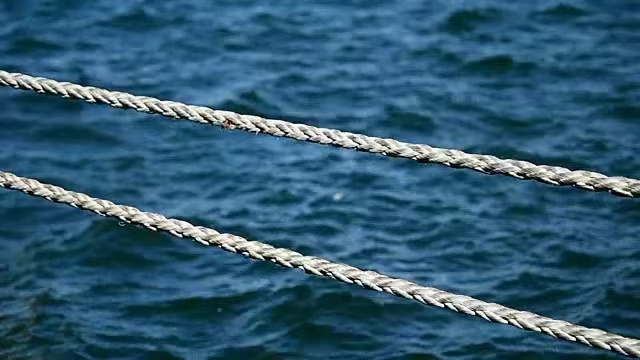
In the vast world of marine equipment, the mooring rope is a fundamental component ensuring the safety and security of vessels worldwide. Among the diverse materials available, Polypropylene (PP) mooring rope has carved out a significant niche as a versatile, reliable, and economical workhorse. Known for its distinctive lightweight and floating characteristics, this synthetic rope has become a go-to solution for a wide array of maritime applications, from securing small boats to supporting large-scale aquaculture projects.
This article provides a comprehensive overview of the 8-strand and 12-strand Polypropylene (PP) mooring rope, exploring its material composition, key advantages, primary applications, and essential guidelines for selection and maintenance.
Material and Construction: The Science Behind the Strength
Polypropylene rope is a thermoplastic polymer-based rope known for its balanced properties. It is typically manufactured in two main fiber types and two common constructions.
Fiber Types:
1 Monofilament Polypropylene: This type is produced from single, continuous strands of fiber. Monofilament ropes are generally stiffer and have a harder finish, which provides excellent abrasion resistance for their cost. They are a popular choice for general-purpose dock lines and applications where durability against friction is a key concern.
2 Multifilament Polypropylene: Made from fine, multiple strands of fiber twisted together, multifilament ropes are significantly softer and more flexible than their monofilament counterparts. This makes them easier to handle, knot, and splice, though they may offer slightly less abrasion resistance.
Rope Constructions:
• 8-Strand (Plaited) Construction: This construction involves four right-hand and four left-hand strands woven together in a plaited or square-braided pattern. An 8-strand mooring line is highly flexible, easy to splice, and non-rotating under load. It coils and flakes easily, making it a favorite for general vessel mooring.
• 12-Strand (Braided) Construction: A 12-strand braid offers a smooth, round, and torque-free profile. It provides a higher strength-to-weight ratio than the 8-strand construction and is known for its excellent handling characteristics and durability. It is often preferred for more demanding towing and mooring applications.
Click here to see more product details.
Key Properties and Advantages
Polypropylene mooring rope offers a unique combination of features that make it a highly practical choice.
Property | Advantage |
Lightweight & Floatable | With a specific gravity of around 0.91, PP rope floats on water. This simplifies retrieval, reduces the risk of fouling propellers, and makes the rope significantly easier for crew to handle. |
Water Resistance | Polypropylene is hydrophobic, meaning it does not absorb water. This ensures it remains lightweight and strong even when wet, and it prevents rot, mildew, and fungal degradation. |
Chemical Resistance | It exhibits excellent resistance to a wide range of chemicals, including most acids and alkalis, as well as oils and fuels. This makes it a durable choice for use in busy ports and industrial marine environments. |
Cost-Effectiveness | Compared to high-modulus fibers like HMPE or polyester, polypropylene offers a much lower price point, providing a reliable and budget-friendly solution for many applications. |
Good Dielectric Properties | As an excellent electrical insulator, it is a safe option for use on vessels and docks where electrical hazards may be present. |
Abrasion Resistance | While not as high as polyester or nylon, monofilament PP rope provides good resistance to abrasion for its cost, ensuring a reasonable service life under normal conditions. |
Common Applications
The versatility of polypropylene mooring rope makes it suitable for a broad spectrum of uses:
3 General Vessel Mooring: It is an excellent choice for boat mooring lines and dock lines for recreational boats, small commercial vessels, barges, and workboats where high-strength, low-elongation properties are not critical.
4 Towing Operations: Its lightweight and floating nature make it a practical option for general-purpose tow lines, especially for secondary or emergency use.
5 Fishery and Aquaculture: This is one of the largest markets for PP rope. It is extensively used for fishing nets, pot and trap lines, and for securing aquaculture cages and longlines due to its resistance to marine growth and low cost.
6 General Utility: Onboard vessels and around docks, it serves countless utility purposes, such as lashing cargo, as heaving lines, or for creating temporary barriers.
How to Choose the Right PP Mooring Rope
Selecting the appropriate rope involves considering several factors:
• Load Requirements: Determine the required breaking strength for your application. Always consult vessel specifications or a marine professional, and apply a suitable safety factor. While PP rope is strong, it is not intended for applications requiring the ultra-high strength of HMPE or the shock-absorbing capacity of nylon.
• Diameter: The diameter directly impacts the rope's strength. Choose a diameter that provides an adequate safety margin for the expected loads.
• Construction (8-Strand vs. 12-Strand): For general mooring where ease of handling and splicing is key, 8-strand is an excellent choice. For applications requiring a smoother profile and slightly higher strength, 12-strand may be preferable.
• Environment: Consider the operational environment. In areas with high abrasion risk, a monofilament construction or a rope with a protective cover might be a better option.
Maintenance and Care
To maximize the service life of your polypropylene mooring rope, follow these best practices:
• Inspect Regularly: Check for signs of wear, such as chafing, cuts, or fiber fusion (glazing) from friction.
• Keep Clean: Wash the rope with fresh water periodically to remove salt crystals and debris that can cause internal abrasion.
• Store Properly: Store the rope away from direct sunlight (UV degradation is a primary weakness of PP), in a well-ventilated area, and away from sharp objects or chemicals.
• Avoid Sharp Bends: Route the rope around fairleads and bollards with a generous radius to avoid excessive stress and premature failure.
Conclusion
Polypropylene (PP) mooring rope, in both 8-strand and 12-strand constructions, holds its place as an indispensable tool in the maritime industry. Its unique blend of buoyancy, water resistance, and cost-effectiveness makes it an unbeatable choice for a multitude of general-purpose applications. While it may not be the solution for every high-tech, heavy-lift challenge, its reliability and practicality ensure that it will remain a staple on docks, decks, and fish farms for years to come.