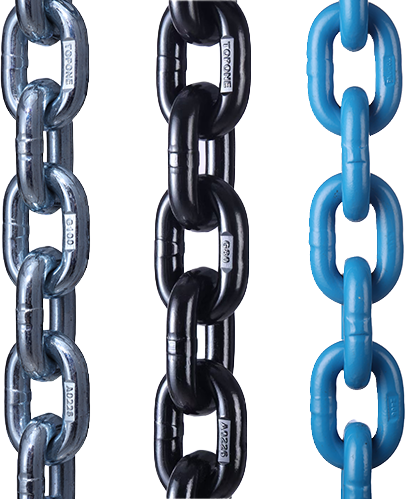
Crews reach for 4 leg adjustable lifting chains when loads sit off-center, pick points don’t match, or headroom changes mid-rig. Adjustable legs let you trim length, hold angles, and share tension far better than fixed assemblies. This guide explains how ratings work on four-leg rigs, how you set angles and equalize legs, which adjusters to choose, and how you inspect chain, hooks, and hardware with measurable limits. Read it once, tape the tables in the cab, and lift irregular loads with control and speed.
1) Why 4 Leg Adjustable Lifting Chains Solve Offset CG
Uneven centers of gravity push one or two legs harder than the others. Adjustable shorteners let you trim two legs, rotate the load into level, and keep hook travel smooth. You also reopen cramped angles without swapping hardware because you shorten the long side and open the leg spread with a spreader bar when needed. The result: faster balance, cleaner travel, and fewer re-rigs.
2) Ratings Truth: 4 Legs Do Not Mean 4× Capacity
Most rating tables for chain slings follow the conservative practice that only three legs carry the load at any time because legs rarely share tension perfectly. Therefore many charts rate a 4-leg sling the same WLL as a 3-leg sling at the same included angle (see your sling tag and standard—ASME B30.9 / EN 818-4 practice). You plan lifts with that rule and you keep one leg as a balancing aid rather than counting it for extra capacity.
3) Angle and Tension—Do the Math Before You Pick
Angle controls tension more than any other variable. Compute tension per active leg with:
T = Load ÷ (N × sin θ)
where N = number of legs you assume carry load (use 3 for 4-leg planning), and θ = angle from vertical.
Angle Factors for Planning (apply to each active leg)
Included Angle (between legs) | θ from Vertical | Factor on Each Active Leg |
60° | 30° | 1.00 |
45° | 22.5° | 1.19 |
30° | 15° | 1.93 |
Example: Lift a 12-ton skid at 60° included angle. Assume three legs carry. Each active leg sees 12 ÷ (3 × sin30°) = 8 t. You choose chain diameter and grade with vertical WLL ≥ 8 t, then confirm the two-, three-, and four-leg numbers on the sling tag at 60°.
4) Choose the Adjuster Hardware That Fits the Job
You adjust length with purpose-built fittings; you avoid improvised knots or hooks on the side plate.
Adjuster Type | How You Use It | Strength Notes | Best For |
Shortening clutch (grab shortener) | Drop a link into the pocket to shorten | Matches chain grade when marked and paired correctly | Quick, repeatable trims |
Adjustable chain sling head | Built-in shorteners at the master link | Keeps all adjusters at the head for neat rigging | Frequent length changes |
Turnbuckle or ratchet load binder | Adds fine travel on a dedicated leg | Use lifting-rated gear only, never transport binders for overhead | Precise leveling |
You match grades across chain, shorteners, hooks, and shackles. Stamps on links (“8” or “10”), hook bodies, and shortener castings must agree.
5) Build the Head Correctly and Size Every Opening
A 4-leg assembly needs a master link set that seats correctly in the crane hook and leaves space for movement.
Master link inside width ≥ 5 × chain Ø so the hook and latch clear.
Hook throat ≥ 4 × chain Ø so links feed without pinch.
Use bow shackles on pick points when legs may swing; run the pin through the hardware and the bow toward the legs.
Choose self-locking hooks on the load side when vibration or rotation might open spring latches.
6) Set Up a 4-Leg Adjustable Sling in Nine Steps
1. Lay the sling flat, roll links until every stamp faces up.
2. Inspect shorteners; check pockets for cracks or wear.
3. Seat the master link in the crane hook and close the latch.
4. Hook all four legs to rated pick points.
5. Pull snug, then measure leg angles with an angle card or inclinometer.
6. Shorten the long legs evenly until the load sits level.
7. Lift 150 mm and pause; confirm balance and leg tension by feel and gauge.
8. Travel slowly; keep legs clear of corners—fit wear sleeves where the chain touches edges.
9. Land the load straight; release tension before you unhook.
You never stand under the load and you never chase a swinging hook; you lower, then adjust.
7) Inspect With Numbers, Then Log the Result
You run the same measurable checks every shift:
Pitch growth: measure five consecutive links under light tension; replace the leg when elongation exceeds the manufacturer’s limit (many programs use >3 %).
Crown wear: gauge crown diameter; retire the leg when loss exceeds the limit (many programs use ≈10 %).
Hook health: check latch action and throat opening; scrap hooks that spread or show cracks at the saddle or neck.
Shortener pockets: look for peening, sidewall cracks, or out-of-round pockets.
Tag and traceability: confirm legible grade, WLL tables, serial number, and maker ID.
Record the inspection with date, unit ID, and photos of stamps; keep the proof-test sheet with your sling file.
8) Control Environment—Pick Finish and Temperature Limits
General shops: G80 alloy with black oxide or phosphate runs clean and simple.
Splash or coastal yards: zinc-nickel coated G80 resists salt spray and wipes down easily.
Wash-down or chemical plants: stainless G80 (304/316) handles corrosion better; match hooks and master links to the same alloy to avoid galvanic issues.
Hot work: follow the maker’s temperature curve; many programs hold full WLL to a specified limit, then require derating. You log heat exposure on the sling file.
9) Common Mistakes You Eliminate
Counting four legs for capacity. You plan with three active legs and treat the fourth as balance.
Skipping angle measurement. You measure and adjust; you never guess.
Mixing grades. A G70 hook on a G80 sling drags the assembly down; you read every stamp.
Shortening on the wrong side. You engage shorteners on straight, un-twisted legs only; you never hook mid-crown or on side plates.
Quick Reference Table—At the Hook
Check | Target |
Active-leg count for planning | 3 on a 4-leg sling |
Included angle (best practice) | 60° between legs |
Master link width | ≥ 5 × chain Ø |
Hook throat | ≥ 4 × chain Ø |
Pitch growth limit (typical program) | > 3 % → retire leg |
Crown wear limit (typical program) | ≈ 10 % loss → retire leg |
Conclusion
Plan with three active legs, trim with rated shorteners, measure angles, and log inspections, and 4 leg adjustable lifting chains will level awkward loads while you keep tension under control—contact TOPONE CHAIN today for certified adjustable four-leg assemblies with full documentation.