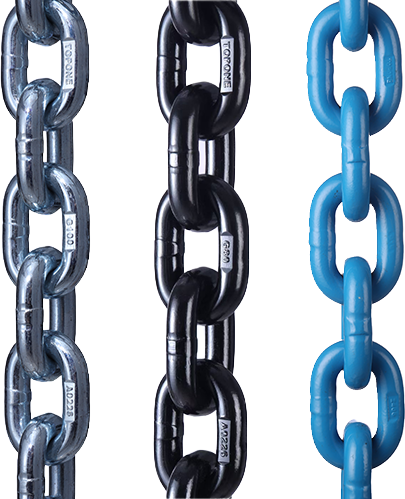
The primary chain hoist purpose is to lift, lower, and position a load in a controlled way. By using a chain, gearing, and a braking mechanism, a chain hoist lets an operator handle loads that could not be lifted safely by hand alone.
Chain hoists are used for equipment installation, maintenance, material handling, and other jobs that require vertical lifting. The right hoist depends on the load weight, lifting height, suspension point, available headroom, and frequency of use. This guide explains how a chain hoist works, where it is useful, and what to check when selecting one.
How Does a Chain Hoist Work?
A chain hoist hangs from a suitable support above the load. Its lower hook connects to the load or an appropriate lifting attachment. Inside the hoist, the drive mechanism moves the load chain through a chain wheel, raising or lowering the lower hook.
In a manual chain hoist, the operator pulls a separate hand chain. This turns the internal gears, allowing the load to move with less pulling effort. A load brake holds the load when the operator stops pulling. Manual hand chain hoists are also commonly called chain blocks.
An electric chain hoist performs the lifting movement with a motor instead of a hand chain. Both types use a load chain, but their operating methods and suitable work cycles differ. A lever hoist is another manual lifting device; it is operated by moving a handle rather than pulling a hand chain.
Load chain and hand chain have different jobs: the load chain supports and moves the load, while the hand chain operates a manual hoist. They must not be treated as interchangeable parts.

What Is a Chain Hoist Used For?
Application | Typical lifting task | Why a chain hoist is useful |
Equipment installation | Raising a motor, pump, or machine component into position | Allows controlled vertical movement during alignment |
Industrial maintenance | Removing and reinstalling heavy parts | Can be suspended near the work area when a suitable support is available |
Workshops and fabrication | Lifting components onto a bench or into an assembly | Gives operators precise control over lifting and lowering |
Warehouses | Handling heavy items at a designated lifting point | Reduces reliance on manual lifting |
Construction sites | Positioning structural or mechanical components | A manual model can work where electrical power is unavailable |
Shipyards and plant rooms | Lifting parts in confined work areas | Compact models can be selected where access and headroom are limited |
These are examples, not a guarantee that any hoist will suit every task. The support structure, lifting arrangement, and rated capacity must match the actual job. TOPONE’s Hand Chain Hoist product page shows a manual option for industrial, construction, and warehouse lifting.
Why Use a Chain Hoist Instead of Lifting by Hand?
A chain hoist provides mechanical advantage and controlled movement. The operator can raise a load in small increments, stop at the required height, and lower it into position. This is valuable when installing machinery or working around components that require careful alignment.
The hoist also keeps the lifting task within a defined rated capacity. That rating applies to the complete hoist configuration, not simply to the strength of its chain. Hooks, the brake, suspension arrangement, and support point all matter.
A chain hoist is intended for lifting according to its product instructions. Do not use a standard vertical lifting arrangement for side pulling or for lifting people.
How Do You Choose a Chain Hoist for the Job?
Before selecting a model, confirm these five points:
1. Load weight: Include the item being lifted and any below-the-hook attachments.
2. Rated capacity: Choose a hoist with a rating appropriate for the complete suspended load.
3. Lifting height: Check the distance the lower hook must travel.
4. Headroom and suspension: Confirm that the hoist fits beneath the support and can be attached correctly.
5. Frequency and environment: Consider how often it will be used and whether moisture, dust, or other site conditions affect selection.
For a specific manual model, compare these details on the TOPONE HSZ-C Hand Chain Hoist product page. Its parameter list includes capacity, standard lift, chain falls, and minimum distance between hooks. You can also browse the TOPONE Chain Hoist range to compare available designs. toponechain.com
FAQ
Is a chain hoist the same as a chain block?
In common industrial usage, chain block usually means a manually operated hand chain hoist. Chain hoist is the broader term and can also refer to electric chain hoists.
Does the hand chain lift the load?
No. On a manual chain hoist, pulling the hand chain operates the gears. The load chain moves the lower hook and supports the load.
Can a chain hoist move a load sideways?
A standard suspended chain hoist provides vertical lifting and lowering. Horizontal travel requires a suitable trolley and support system. Do not side pull with the hoist unless the specific equipment and lifting arrangement permit it.
What is the most important factor when selecting a chain hoist?
Start with the complete load weight and the hoist’s rated capacity. Then check lift height, headroom, suspension, and operating conditions. Capacity alone does not tell you whether a model will fit the work area.
Conclusion
A chain hoist exists to move heavy loads vertically, steadily, and with control. Understanding the difference between the hand chain, load chain, drive mechanism, and brake makes it easier to choose and use the equipment correctly. Match the complete hoist to the load and work site before lifting.