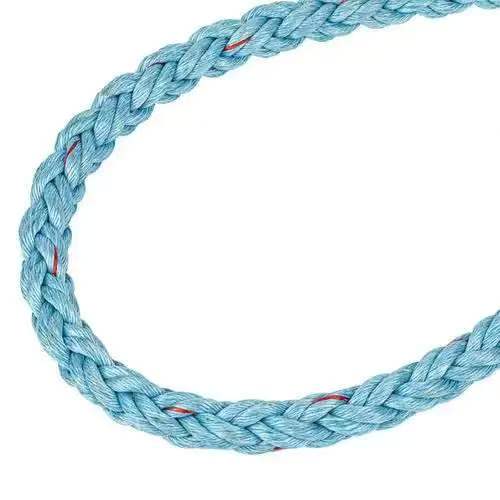
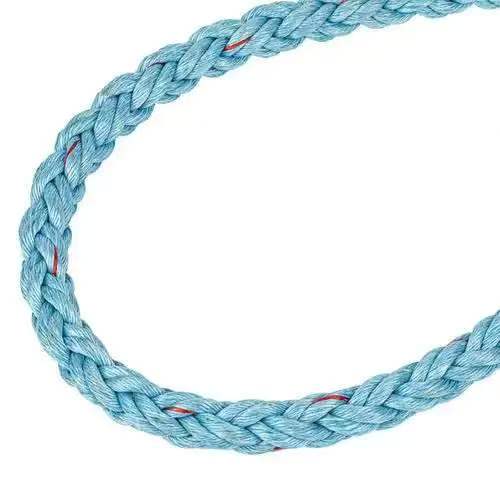
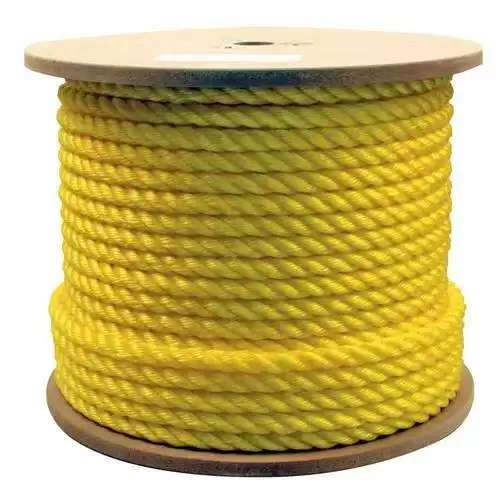
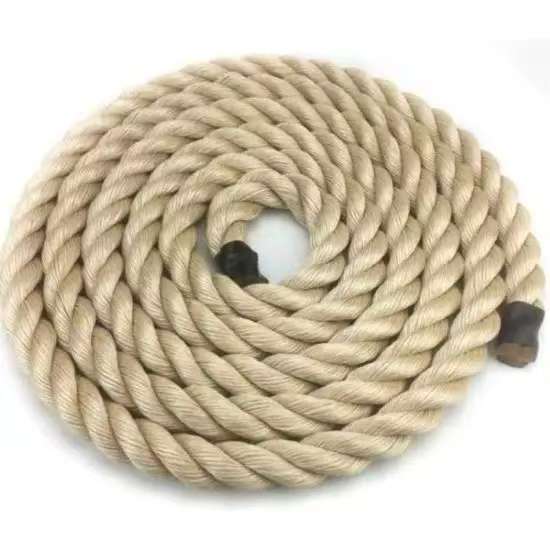
The 8-Strand and 12-Strand Polyester Mooring Rope from TOPONE is a premier maritime solution engineered for extreme durability, stability, and safety in the most demanding offshore and port environments. Manufactured from 100% high-tenacity industrial polyester filaments, this rope is designed to meet and exceed ISO 1141:2021 and OCIMF MEG4 guidelines. Its advanced braided construction provides a torque-free, non-rotating structure that ensures easy handling and superior load distribution. With a specific gravity of 1.38, this rope is designed to sink, making it ideal for deep-water mooring where surface interference must be minimized. Featuring low elongation (12%-20% at break) and exceptional UV and chemical resistance, our polyester mooring ropes deliver a long service life and consistent performance, whether used for large vessel mooring, ocean transport, or heavy-duty industrial towing.
Understanding 8-Strand and 12-Strand Polyester Mooring Ropes
The Critical Role of Mooring Ropes in Maritime Operations
In the maritime industry, the mooring rope is far more than a simple cable—it is the vital connection between vessel and dock, the lifeline that keeps multi-million-dollar ships safely secured in port. The selection of the right mooring rope can mean the difference between safe, efficient port operations and catastrophic failure with devastating consequences.
For decades, marine professionals have relied on polyester mooring ropes because of their exceptional combination of strength, durability, and reliability. Among these, the 8-strand and 12-strand polyester mooring ropes represent the highest standards of marine rope engineering, offering performance characteristics that exceed the demands of modern maritime operations.
Why Polyester Dominates Marine Applications
Polyester has become the material of choice for marine mooring ropes because it delivers an optimal balance of properties that no other fiber can match:
•Superior Strength-to-Weight Ratio: Polyester fibers provide exceptional tensile strength while remaining lightweight, making them easier to handle than steel wire rope while delivering comparable load capacity
•Excellent Environmental Resistance: Unlike natural fibers that degrade quickly in marine environments, polyester resists UV radiation, saltwater corrosion, and chemical attack
•Consistent Performance: Polyester maintains stable properties across a wide range of temperatures and humidity levels, ensuring predictable performance in all maritime conditions
•Cost Effectiveness: Polyester ropes deliver superior performance at a fraction of the cost of steel wire rope, improving operational economics
•Ease of Handling: Polyester ropes are significantly easier to handle, splice, and maintain compared to steel wire alternative
Choosing Between 8-Strand and 12-Strand
The choice between 8-strand and 12-strand construction depends on your specific application requirements:
•Choose 8-Strand if: You prioritize ease of handling, require frequent splicing or modifications, or operate in conditions where flexibility is important
•Choose 12-Strand if: You require maximum load stability, operate in high-abrasion environments, or need superior performance in high-cycle applications
Material Science: Premium Polyester Fiber Composition
The Chemistry of Superior Performance
The polyester mooring ropes are manufactured from premium-grade polyester fibers that have been engineered specifically for marine applications. This is not generic polyester; it is a precisely formulated material with specific characteristics:
Fiber Properties:
•Molecular Structure: The polyester fibers are manufactured with optimized molecular alignment, creating stronger, more durable fibers than standard polyester
•The durability ensures reliable performance through extended port stays
•The ease of maintenance reduces operational costs
Towage and Salvage Operations
Towing operations present extreme demands on mooring ropes:
•Dynamic loading as vessels are accelerated and decelerated
•Shock loads when lines suddenly become taut
•Exposure to extreme environmental conditions
•Need for reliable performance in emergency situations
The 8-strand and 12-strand polyester ropes are trusted for these critical applications because:
•The high breaking loads provide adequate safety margins for extreme loads
•The low-stretch characteristics reduce shock loading and improve control
•The proven reliability in emergency situations gives operators confidence
•The ease of handling allows quick deployment in time-critical situations
Port and Harbor Operations
Port operations involve constant movement and handling of mooring ropes:
•Frequent deployment and retrieval
•Exposure to rough deck equipment and fairleads
•Need for easy handling and maintenance
•Extended service life requirements
The polyester mooring ropes deliver because:
•The abrasion resistance withstands constant contact with deck equipment
•The ease of handling reduces labor costs and improves efficiency
•The durability extends service life and reduces replacement costs
•The proven performance in major ports worldwide demonstrates reliability
Parameter
Understanding Breaking Load Specifications
The minimum breaking load (MBL) is the most critical specification for a mooring rope. It represents the load at which the rope will break under static tension. The specifications for the 8-strand and 12-strand polyester mooring ropes are:
Diameter (mm)
Circumference (inches)
Weight/200m (kg)
Breaking Load (kN)
Breaking Load (tons)
20
2-1/2
60.6
62.3
6.36
40
5
243
235
23.98
60
7-1/2
546
489
49.90
80
10
970
867
88.47
100
12-1/2
1,500
1,340
136.74
140
17-1/2
3,129.8
2,523
257.45
What These Numbers Tell You:
•Linear Scaling: Notice that breaking load increases approximately with the square of the diameter. A 40mm rope is roughly 4 times stronger than a 20mm rope (because 40² ÷ 20² = 4)
•Weight Efficiency: The weight per unit length increases with diameter, but not proportionally to breaking load. A 100mm rope is 25 times stronger than a 20mm rope, but only about 25 times heavier
•Selection Guidance: For a given application, you can select the minimum diameter rope that provides adequate breaking load with appropriate safety margin
Understanding Elongation Characteristics
The low-stretch characteristic of polyester mooring ropes is critical for many applications:
•Minimal Elongation: Under working loads (typically 50% of breaking load), polyester mooring ropes elongate less than 3%, compared to 5-7% for lower-grade ropes
•Stable Load Distribution: The low elongation ensures that loads remain evenly distributed across all mooring lines
•Precise Load Control: The minimal elongation allows precise control of vessel position and load distribution
•Reduced Shock Loading: The low elongation reduces the shock loads that occur when lines suddenly become taut
Complete Technical Specifications
Standard Sizes and Performance Data
Diameter (mm)
Circumference (inches)
Weight/200m (kg)
Breaking Load (kN)
Breaking Load (tons)
Typical Applications
20
2-1/2
60.6
62.3
6.36
Small vessels, auxiliary lines
40
5
243
235
23.98
Medium vessels, general mooring
60
7-1/2
546
489
49.90
Large vessels, primary mooring
80
10
970
867
88.47
Very large vessels, heavy-duty applications
100
12-1/2
1,500
1,340
136.74
Mega-vessels, extreme-duty applications
140
17-1/2
3,129.8
2,523
257.45
Ultra-heavy-duty, specialized applications
Material Specifications
Property
Specification
Test Method
Standard
Fiber Material
Premium-grade polyester (PES)
Material analysis
ISO 1209
Fiber Grade
High-tenacity polyester
Tensile testing
ASTM D6775
Strand Construction
8-strand or 12-strand braided
Visual inspection
EN 1891
Lay Direction
Right-hand or left-hand (customer specified)
Visual inspection
ISO 1209
Rope Diameter Tolerance
±3% of nominal diameter
Micrometer measurement
ISO 1209
Weight Tolerance
±5% of nominal weight per 200m
Weighing scale
ISO 1209
Color
Typically white or natural (custom colors available)
Visual inspection
ISO 1209
Surface Finish
Smooth, uniform surface
Visual inspection
ISO 1209
Performance Specifications
Property
Specification
Test Method
Standard
Minimum Breaking Load
As specified per diameter
Tensile testing to failure
ISO 1209
Elongation at Break
15-20% (typical)
Tensile testing
ISO 1209
Elongation at 50% MBL
<3% (low-stretch characteristic)
Load testing
ISO 1209
UV Resistance
Retains ≥90% strength after 500 hours UV exposure
Accelerated UV testing
ASTM G154
Abrasion Resistance
Superior resistance to surface wear
Abrasion testing
ISO 5470
Chemical Resistance
Resistant to acids, bases, oils, and common marine chemicals
Chemical immersion testing
ISO 1419
Water Absorption
<1% weight gain after 24-hour water immersion
Water immersion testing
ISO 1419
Temperature Range
-20°C to +60°C (-4°F to +140°F)
Material specification
ISO 1209
Elongation Characteristics (Critical for Mooring Applications)
Load Level
Elongation (8-strand)
Elongation (12-strand)
Significance
10% MBL
<0.5%
<0.5%
Minimal deformation at light loads
25% MBL
<1%
<1%
Stable load distribution at typical working loads
50% MBL
<3%
<3%
Predictable behavior at maximum working loads
75% MBL
5-8%
5-8%
Controlled deformation before failure
At Breaking Load
15-20%
15-20%
Final elongation before rope failure
Comparison: 8-Strand vs. 12-Strand Construction
Characteristic
8-Strand
12-Strand
Advantage
Flexibility
Higher
Lower
8-strand better for bending around equipment
Load Distribution
Good
Superior
12-strand distributes loads more evenly
Roundness
Moderate
Excellent
12-strand maintains better circular shape
Abrasion Resistance
Good
Superior
12-strand resists wear better
Handling Ease
Excellent
Good
8-strand easier to grip and handle
Splicing Simplicity
Easier
More complex
8-strand faster to splice
Spin Resistance
Moderate
Superior
12-strand resists rotation better
Cost
Lower
Higher
8-strand more economical
Best Application
General mooring, frequent handling
Heavy-duty, high-cycle, precision mooring
Diameter Scaling Properties
Understanding how rope properties scale with diameter is important for selection:
Property
Scaling Factor
Breaking Load
Proportional to diameter²
Weight per Unit Length
Proportional to diameter²
Bending Stiffness
Proportional to diameter⁴
Abrasion Resistance
Proportional to diameter
Handling Difficulty
Proportional to diameter
Example: A 60mm rope is 3 times the diameter of a 20mm rope:
•Breaking load: 3² = 9 times stronger
•Weight: 3² = 9 times heavier
•Bending stiffness: 3⁴ = 81 times stiffer
•Handling difficulty: 3 times harder to handle
Standards
ISO 1209: Polyester Fiber Ropes
ISO 1209 is the primary international standard governing polyester fiber ropes for marine applications. This standard specifies:
Material Requirements:
•Polyester fiber composition and purity
•Fiber strength and elongation characteristics
•Fiber diameter and uniformity
•Fiber finish and sizing requirements
Manufacturing Requirements:
•Strand twisting specifications
•Rope laying specifications
•Rope diameter and weight tolerances
•Rope uniformity requirements
Testing Requirements:
•Breaking load testing procedures
•Elongation testing procedures
•Diameter and weight verification
•Surface quality inspection
Performance Specifications:
•Minimum breaking loads for each diameter
•Maximum elongation at specified loads
•UV resistance requirements
•Chemical resistance requirements
The 8-strand and 12-strand polyester mooring ropes fully comply with all ISO 1209 requirements.
EN 1891: Safety Requirements for Rope Mooring Systems
EN 1891 is the European standard that establishes safety requirements for rope mooring systems used in maritime applications. Key provisions include:
Safety Factor Requirements:
•Minimum 2.5:1 safety factor for normal operations
•Minimum 2.0:1 safety factor for emergency operations
•Safety factors account for rope degradation and environmental factors
Testing and Certification:
•Ropes must be tested to verify minimum breaking loads
•Test reports must be provided with each rope shipment
•Ropes must be certified by recognized testing laboratories
Material Requirements:
•Ropes must be manufactured from materials suitable for marine environments
•Materials must resist UV radiation, saltwater, and chemical attack
•Materials must maintain consistent properties over extended service life
Inspection and Maintenance:
•Ropes must be inspected regularly for signs of damage or degradation
•Damaged ropes must be replaced immediately
•Maintenance procedures must follow manufacturer recommendations
The 8-strand and 12-strand polyester mooring ropes exceed all EN 1891 requirements.
ISO 1419: Resistance of Textiles to Acids and Alkalis
ISO 1419 specifies testing procedures for evaluating the chemical resistance of textile fibers. The polyester mooring ropes are tested according to this standard to verify:
•Resistance to common acids (sulfuric acid, hydrochloric acid, etc.)
•Resistance to common bases (sodium hydroxide, ammonia, etc.)
•Resistance to saltwater and marine environments
•Resistance to industrial chemicals and oils
The test results demonstrate that polyester mooring ropes retain at least 90% of their original strength after exposure to common marine chemicals.
ASTM G154: Accelerated Weathering Test (Fluorescent UV and Condensation)
ASTM G154 specifies procedures for accelerated UV exposure testing. The polyester mooring ropes are tested according to this standard to verify UV resistance:
•Ropes are exposed to 500 hours of accelerated UV radiation
•Ropes are tested for strength retention after UV exposure
•Ropes must retain at least 90% of original strength
•Testing verifies that UV stabilizers in the polyester fiber are effective
ISO 5470: Resistance of Textiles to Abrasion
ISO 5470 specifies testing procedures for evaluating the abrasion resistance of textile fibers. The polyester mooring ropes are tested according to this standard to verify:
•Resistance to surface wear from contact with deck equipment
•Resistance to fiber separation and unraveling
•Durability under high-friction conditions
•Extended service life in demanding applications
Regulatory Compliance
International Maritime Organization (IMO) Requirements
The International Maritime Organization establishes guidelines for maritime safety, including mooring rope specifications. The 8-strand and 12-strand polyester mooring ropes comply with:
•SOLAS (Safety of Life at Sea): International convention establishing minimum safety standards for ships
•MARPOL (Marine Pollution Prevention): International convention for prevention of pollution from ships
•ISM Code (International Safety Management Code): International code for safe operation of ships
Classification Society Requirements
Major classification societies (DNV, Lloyd's Register, American Bureau of Shipping, etc.) establish standards for ship equipment, including mooring ropes. The polyester mooring ropes meet the requirements of:
•DNV GL: Det Norske Veritas - Germanischer Lloyd
•Lloyd's Register: UK-based classification society
•ABS: American Bureau of Shipping
•ClassNK: Nippon Kaiji Kyokai (Japan)
•CCS: China Classification Society
Port Authority Requirements
Major ports worldwide establish specifications for mooring ropes used in their facilities. The 8-strand and 12-strand polyester mooring ropes meet the requirements of:
•Port of Singapore: World's busiest transshipment port
•Port of Rotterdam: Europe's largest port
•Port of Shanghai: World's busiest container port
•Port of Hong Kong: Major Asia-Pacific port
•Port of Los Angeles: Major North American port
Testing and Certification
Breaking Load Testing
Every rope is tested to verify minimum breaking loads:
•Test Method: The rope is subjected to increasing tension until it breaks
•Sample Selection: Ropes are randomly selected from production batches
•Test Equipment: Calibrated testing machines with load cells accurate to ±1%
•Test Report: Detailed reports document the breaking load and elongation characteristics
•Acceptance Criteria: Ropes must meet or exceed specified minimum breaking loads
Diameter and Weight Verification
Every rope is inspected to verify diameter and weight specifications:
•Diameter Measurement: Rope diameter is measured at multiple points along the length
•Weight Verification: Rope weight per unit length is verified by weighing samples
•Tolerance Verification: Measurements are verified to be within specified tolerances
•Documentation: Inspection reports document all measurements
UV Resistance Testing
Sample ropes are tested for UV resistance:
•Test Method: Ropes are exposed to 500 hours of accelerated UV radiation
•Strength Testing: Ropes are tested for breaking load after UV exposure
•Acceptance Criteria: Ropes must retain at least 90% of original strength