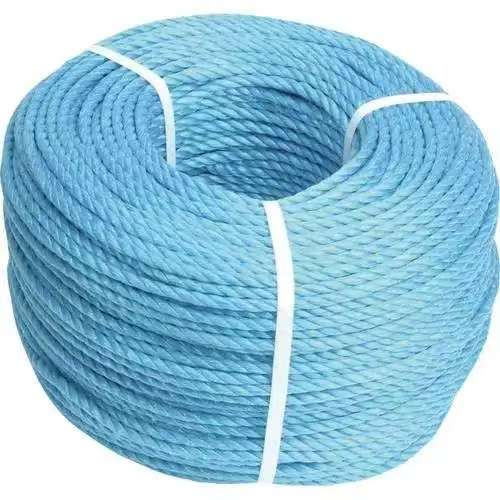
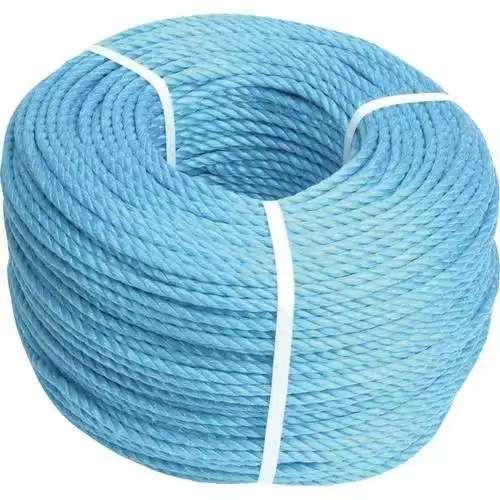
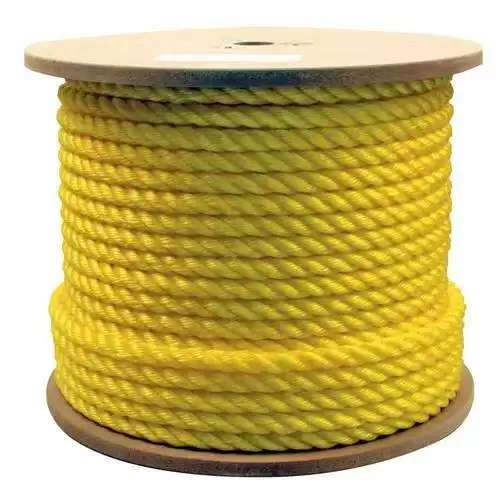
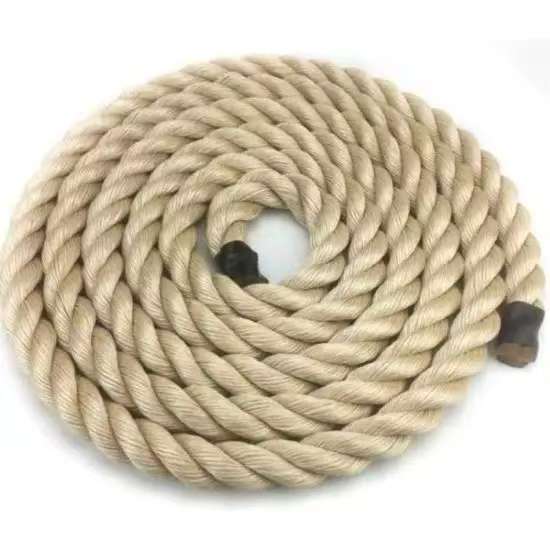
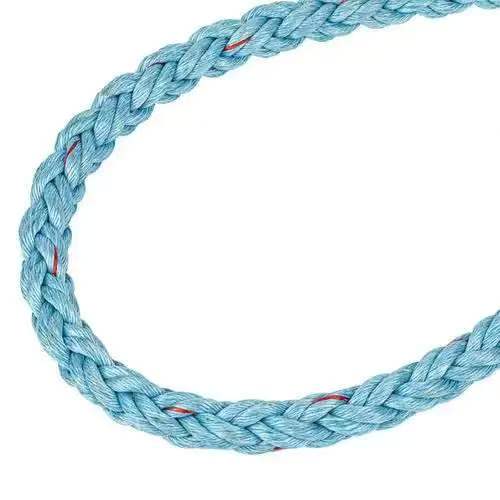
The 3-Strand Polyamide (Nylon) Mooring Rope is a premium-grade mooring rope engineered specifically for demanding maritime applications requiring exceptional impact resistance, elasticity, and shock absorption. Manufactured from high-quality Nylon 66 fibers, this rope delivers the superior combination of strength, resilience, and durability that professional maritime operators demand for dynamic mooring scenarios.
The polyamide fiber structure provides exceptional abrasion resistance, making it the preferred choice for high-friction applications. This superior abrasion resistance is critical for towing operations, salvage applications, and dynamic mooring scenarios where ropes frequently experience friction and wear. The polyamide construction resists fiber separation and unraveling, ensuring extended service life even in the most demanding conditions.
Polyamide rope, commonly known as nylon rope, has been a cornerstone of maritime rope technology for over 60 years. Since its introduction in the 1960s, nylon has proven itself as the superior choice for applications requiring exceptional impact resistance, elasticity, and shock absorption. The 3-strand nylon rope represents the culmination of decades of engineering refinement and practical maritime experience.
Unlike polyester ropes that prioritize UV resistance and chemical stability, nylon ropes are engineered specifically for dynamic loading scenarios where impact resistance and elasticity are paramount. This specialized focus makes nylon the optimal choice for towing, salvage, and dynamic mooring applications.
Why Nylon Excels in Dynamic Applications
Nylon's superiority in dynamic applications comes from its unique material properties:
•Shock Absorption: Nylon absorbs impact energy through elastic deformation
•High Resilience: Nylon returns to original length after load removal (100% spring-back at 3% elongation)
•Superior Abrasion Resistance: Nylon is the most abrasion-resistant synthetic fiber
•Flex Fatigue Resistance: Nylon maintains properties after repeated bending and flexing
•Impact Resistance: Nylon can safely handle sudden load spikes
•Proven Reliability: Decades of successful service in demanding maritime applications
These properties make nylon the preferred choice for professional maritime operators who prioritize safety and reliability in dynamic loading scenarios.
The Engineering Behind Polyamide (Nylon) Rope
Understanding Nylon 66 Fiber Characteristics
Nylon 66 fibers possess unique characteristics that make them ideal for dynamic maritime applications:
Molecular Structure and Strength:
•Nylon has a highly organized molecular structure with strong amide bonds
Every rope is tested to verify specifications before shipment:
•Breaking Load Testing: Sample ropes are tested to destruction
•Diameter Verification: Rope diameter is measured at multiple points
•Weight Verification: Rope weight per unit length is verified
•Elongation Testing: Rope elongation under load is measured
•Elasticity Testing: Rope spring-back characteristics are verified
•Visual Inspection: Surface quality is inspected for defects
•Documentation: Test reports accompany each rope shipment
Application Scenarios: Where Nylon Mooring Rope
Parameter
Complete Technical Specifications
Standard Sizes and Performance Data
Diameter (mm)
Circumference (inches)
Weight (kg/200m)
Breaking Load (kN)
Breaking Load (tons)
Typical Applications
4
1/2
2.1
3.15
0.32
Small utility lines
6
3/4
4.5
7.35
0.75
Small vessel auxiliary lines
8
1
8
13.2
1.35
Small-medium vessel mooring
10
1-1/4
12.4
20.4
2.08
Small-medium vessel mooring
12
1-1/2
17.8
29.4
3
Medium vessel mooring
16
2
31.6
52
5.31
Medium vessel mooring
20
2-1/2
49
81.4
8.31
Medium-large vessel mooring
24
3
71
118
12.04
Large vessel mooring
28
3-1/2
97
155
15.82
Large vessel mooring
32
4
126
196
20
Large vessel mooring
40
5
198
294
30
Very large vessel mooring
48
6
284
412
42.04
Very large vessel mooring
56
7
386
549
56.02
Very large vessel mooring
60
7-1/2
442
626
63.88
Very large vessel mooring
Material Specifications
Property
Specification
Test Method
Standard
Fiber Material
Polyamide 66 (Nylon 66)
Material analysis
ISO 1209
Fiber Grade
High-tenacity nylon fibers
Tensile testing
ASTM D6775
Fiber Density
1.12-1.14 g/cm³
Density measurement
ISO 1183
Melting Point
215°C
Thermal analysis
ISO 11357
Construction
3-strand laid rope
Visual inspection
ISO 1209
Lay Direction
Right-hand or left-hand (customer specified)
Visual inspection
ISO 1209
Rope Diameter Tolerance
±5-10% of nominal diameter
Micrometer measurement
ISO 1209
Weight Tolerance
±5% of nominal weight per 200m
Weighing scale
ISO 1209
Color
White, natural, or custom colors available
Visual inspection
ISO 1209
Surface Finish
Smooth, uniform surface
Visual inspection
ISO 1209
Performance Specifications
Property
Specification
Test Method
Standard
Minimum Breaking Load
As specified per diameter
Tensile testing to failure
ISO 1209
Elongation at Break
35-40% (typical)
Tensile testing
ISO 1209
Elongation at 50% MBL
15-20% (high-stretch characteristic)
Load testing
ISO 1209
Resilience at 3% Elongation
100% spring-back
Elasticity testing
ISO 1209
Abrasion Resistance
Superior resistance to surface wear
Abrasion testing
ISO 5470
Chemical Resistance
Good resistance to most chemicals
Chemical immersion testing
ISO 1419
Water Absorption
2-4% weight gain after 24-hour water immersion
Water immersion testing
ISO 1419
Flotation
Rope sinks (non-floating)
Flotation testing
Custom method
Temperature Range
-20°C to +80°C (-4°F to +176°F)
Material specification
ISO 1209
Maximum Continuous Temperature
80°C
Material specification
ISO 1209
Service Life
4-6 years (typical)
Field experience
Industry standard
Elongation Characteristics (Critical for Dynamic Applications)
Load Level
Elongation (%)
Resilience
Significance
3% Load
3%
100%
Complete recovery
10% MBL
4-5%
95%+
Minimal permanent deformation
25% MBL
8-10%
90%+
Stable load distribution
50% MBL
15-20%
80%+
Significant elasticity
75% MBL
25-30%
70%+
Controlled deformation
At Breaking Load
35-40%
—
Final elongation before failure
Diameter Scaling Properties
Understanding how rope properties scale with diameter is important for selection:
Property
Scaling Factor
Breaking Load
Proportional to diameter²
Weight per Unit Length
Proportional to diameter²
Bending Stiffness
Proportional to diameter⁴
Abrasion Resistance
Proportional to diameter
Handling Difficulty
Proportional to diameter
Comparison: Nylon vs. Alternative Materials
Characteristic
Nylon
Polyester
Polypropylene
Polyethylene
Strength
Excellent
Excellent
Good
Good
Abrasion Resistance
Superior
Excellent
Fair
Fair
Impact Resistance
Superior
Fair
Fair
Fair
Elasticity
High
Low
Low
Low
Resilience
100% at 3%
Lower
Lower
Lower
UV Resistance
Fair
Excellent
Fair
Fair
Chemical Resistance
Good
Excellent
Excellent
Excellent
Heat Resistance
Excellent
Excellent
Fair
Fair
Service Life (Dynamic)
4-6 years
3-5 years
2-3 years
2-3 years
Cost
High
Medium
Low
Low
Best Application
Dynamic loading
Static mooring
Budget
Floating
Weight Comparison Across Diameters
Diameter (mm)
Nylon Weight (kg/200m)
Polyester Weight (kg/200m)
Weight Difference
10
12.4
15.2
18.4% lighter
20
49
60.6
19.1% lighter
40
198
243
18.5% lighter
60
442
546
19.1% lighter
Key Insight: Nylon ropes are approximately 18-19% lighter than polyester ropes of the same diameter, making them easier to handle while maintaining superior strength.
Standards
International Standards Compliance
ISO 1209: Polyester and Polyolefin Fiber Ropes
ISO 1209 is the primary international standard governing synthetic fiber ropes for marine applications. While primarily focused on polyester and polyolefin, the standard also applies to polyamide ropes:
Material Requirements:
•Polyamide fiber composition and purity
•Fiber strength and elongation characteristics
•Fiber diameter and uniformity
•Fiber finish and sizing requirements
Manufacturing Requirements:
•Strand twisting specifications
•Rope laying specifications
•Rope diameter and weight tolerances
•Rope uniformity requirements
•Quality control procedures
Testing Requirements:
•Breaking load testing procedures
•Elongation testing procedures
•Diameter and weight verification
•Surface quality inspection
Performance Specifications:
•Minimum breaking loads for each diameter
•Maximum elongation at specified loads
The 3-strand nylon mooring ropes comply with ISO 1209 requirements.
EN 1891: Safety Requirements for Rope Mooring Systems
EN 1891 is the European standard that establishes safety requirements for rope mooring systems. The nylon mooring ropes meet all EN 1891 requirements:
Safety Factor Requirements:
•Minimum 2.5:1 safety factor for normal operations
•Minimum 2.0:1 safety factor for emergency operations
•Safety factors account for rope degradation and environmental factors
Testing and Certification:
•Ropes must be tested to verify minimum breaking loads
•Test reports must be provided with each rope shipment
•Ropes must be certified by recognized testing laboratories
Material Requirements:
•Ropes must be manufactured from materials suitable for marine environments
•Materials must maintain consistent properties over extended service life
Inspection and Maintenance:
•Ropes must be inspected regularly for signs of damage or degradation
•Damaged ropes must be replaced immediately
•Maintenance procedures must follow manufacturer recommendations
The nylon mooring ropes exceed all EN 1891 requirements.
ISO 1419: Resistance of Textiles to Acids and Alkalis
ISO 1419 specifies testing procedures for evaluating the chemical resistance of textile fibers. The nylon mooring ropes are tested according to this standard to verify:
•Resistance to common acids (sulfuric acid, hydrochloric acid, etc.)
•Resistance to common bases (sodium hydroxide, ammonia, etc.)
•Resistance to saltwater and marine environments
•Resistance to industrial chemicals and oils
The polyamide fiber structure provides good chemical resistance, making it suitable for maritime applications.
ISO 5470: Resistance of Textiles to Abrasion
ISO 5470 specifies testing procedures for evaluating the abrasion resistance of textile fibers. The nylon mooring ropes are tested according to this standard to verify:
•Resistance to surface wear from contact with deck equipment
•Resistance to fiber separation and unraveling
•Durability under high-friction conditions
•Extended service life in demanding applications
The polyamide fiber structure provides superior abrasion resistance compared to all alternative materials.
DNV Certification
The 3-strand nylon mooring ropes are certified by DNV (Det Norske Veritas), one of the world's leading classification societies:
•DNV Certification: Verifies that ropes meet international standards
•Testing Requirements: All ropes are tested according to DNV specifications
•Documentation: Certification documents accompany each rope shipment
Regulatory Compliance
International Maritime Organization (IMO) Requirements
The International Maritime Organization establishes guidelines for maritime safety, including mooring rope specifications. The nylon mooring ropes comply with:
•SOLAS (Safety of Life at Sea): International convention establishing minimum safety standards for ships
•MARPOL (Marine Pollution Prevention): International convention for prevention of pollution from ships
•ISM Code (International Safety Management Code): International code for safe operation of ships
Classification Society Requirements
Major classification societies establish standards for ship equipment, including mooring ropes. The nylon mooring ropes meet the requirements of:
•DNV GL: Det Norske Veritas - Germanischer Lloyd
•Lloyd's Register: UK-based classification society
•ABS: American Bureau of Shipping
•ClassNK: Nippon Kaiji Kyokai (Japan)
•CCS: China Classification Society
Port Authority Requirements
Major ports worldwide establish specifications for mooring ropes. The nylon mooring ropes meet the requirements of major international ports.
Testing and Certification
Breaking Load Testing
Every rope is tested to verify minimum breaking loads:
•Test Method: The rope is subjected to increasing tension until it breaks
•Sample Selection: Ropes are randomly selected from production batches
•Test Equipment: Calibrated testing machines with load cells accurate to ±1%
•Test Report: Detailed reports document the breaking load and elongation characteristics
•Acceptance Criteria: Ropes must meet or exceed specified minimum breaking loads
Diameter and Weight Verification
Every rope is inspected to verify diameter and weight specifications:
•Diameter Measurement: Rope diameter is measured at multiple points along the length
•Weight Verification: Rope weight per unit length is verified by weighing samples
•Tolerance Verification: Measurements are verified to be within specified tolerances
•Documentation: Inspection reports document all measurements
Elasticity and Resilience Testing
Sample ropes are tested for elasticity and resilience characteristics:
•Test Method: Ropes are loaded to specific elongation levels and then unloaded
•Spring-Back Measurement: The amount of spring-back is measured
•Resilience Calculation: Resilience percentage is calculated
•Acceptance Criteria: Ropes must achieve 100% spring-back at 3% elongation
Abrasion Resistance Testing
Sample ropes are tested for abrasion resistance:
•Test Method: Ropes are subjected to standardized abrasion testing
•Wear Measurement: Surface wear is measured after testing
•Acceptance Criteria: Ropes must meet specified abrasion resistance standards
•Documentation: Test reports verify abrasion resistance
Maintenance and Inspection Guidelines
Regular Inspection Procedures
Mooring ropes should be inspected regularly to detect signs of damage or degradation: