Introduction
Material Composition and Metallurgical Characteristics
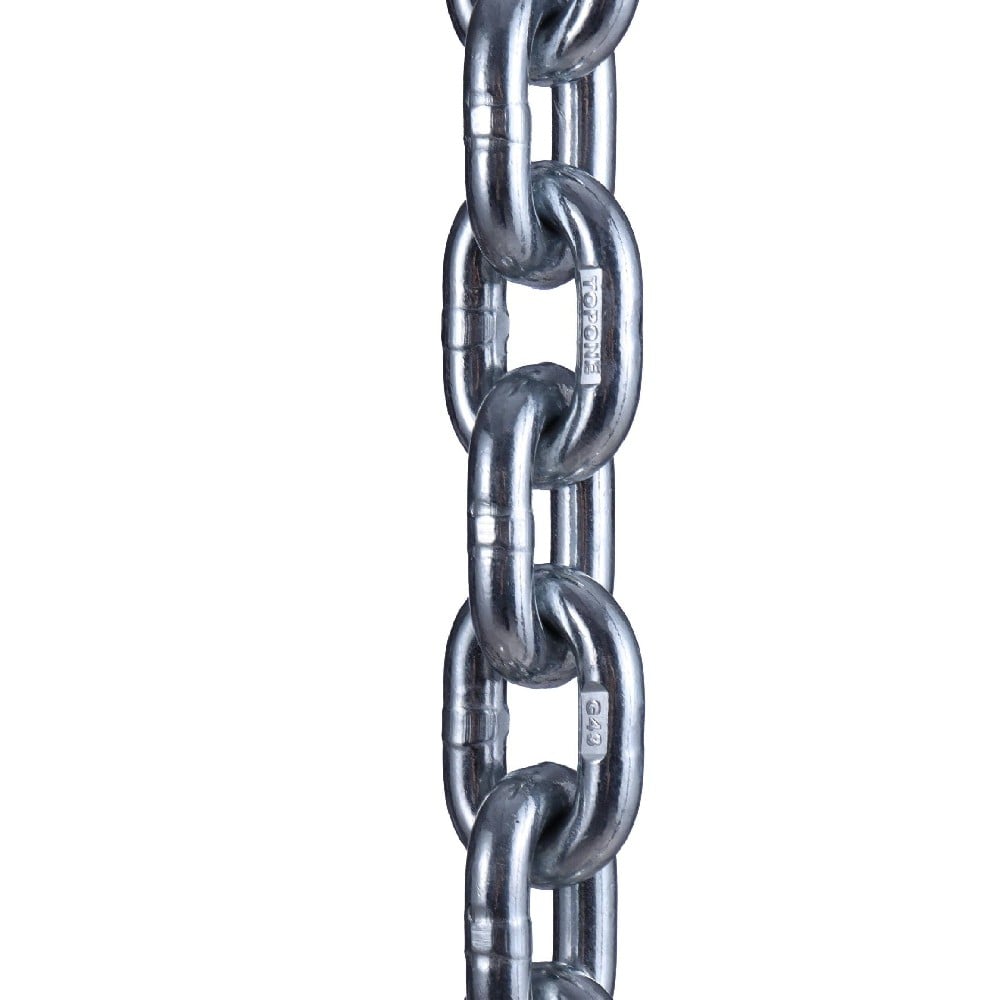
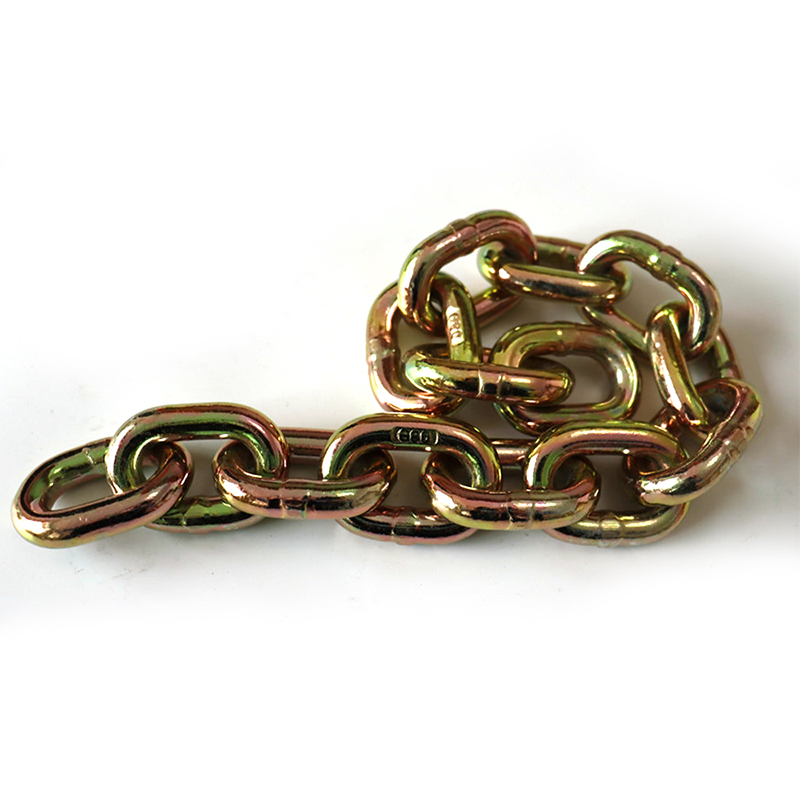
Grade 43 Chain Self Color - Round Pail is produced using Q235B carbon structural steel, which is defined under Chinese GB/T standards and widely recognized as equivalent to ASTM A36 in terms of mechanical behavior. This material contains controlled levels of carbon, manganese, and silicon to achieve a balance between ductility and tensile strength. Manganese plays a critical role in improving hardenability and ensuring uniform microstructure during the cooling process, while silicon contributes to structural stability by reinforcing the ferrite-pearlite matrix.
The control of harmful elements such as phosphorus (P) and sulfur (S) is essential in maintaining toughness and preventing brittle fracture. Industry standards typically require P and S content to remain below 0.045%, as specified in ASTM and ISO material guidelines. Lower impurity levels directly improve weldability and fatigue resistance, which are critical for chain applications involving repeated loading cycles.
Unlike higher-grade alloy chains such as Grade 80 or Grade 100, this chain does not require quenching and tempering heat treatment. The absence of heat treatment reduces production complexity and cost while maintaining sufficient mechanical performance for non-lifting applications. The resulting microstructure is primarily ferrite and pearlite, which provides excellent elongation properties and resistance to sudden failure.
Mechanical Properties and Load Performance
The mechanical properties of Grade 43 Chain Self Color - Round Pail are defined according to industry-recognized standards such as NACM Welded Steel Chain Specifications and ASTM A391 guidelines. These standards specify minimum breaking strength, proof load, and elongation requirements to ensure consistent performance across all chain sizes.
Proof load testing is conducted to verify that each chain can withstand a predetermined force without permanent deformation. This test typically applies 2 times the working load limit, ensuring that the chain maintains structural integrity under operational stress. Breaking force testing determines the minimum load at which the chain will fail, and this value is used to calculate the safety factor. For Grade 43 chains, the safety factor generally ranges from 3:1 to 4:1 depending on application conditions.
Elongation is another critical parameter that reflects the ductility of the material. According to ASTM standards, welded steel chains must demonstrate sufficient elongation before fracture to avoid brittle failure. This property ensures that the chain provides visible deformation as a warning before reaching its breaking point, which significantly enhances operational safety.
Surface Condition and Corrosion Behavior
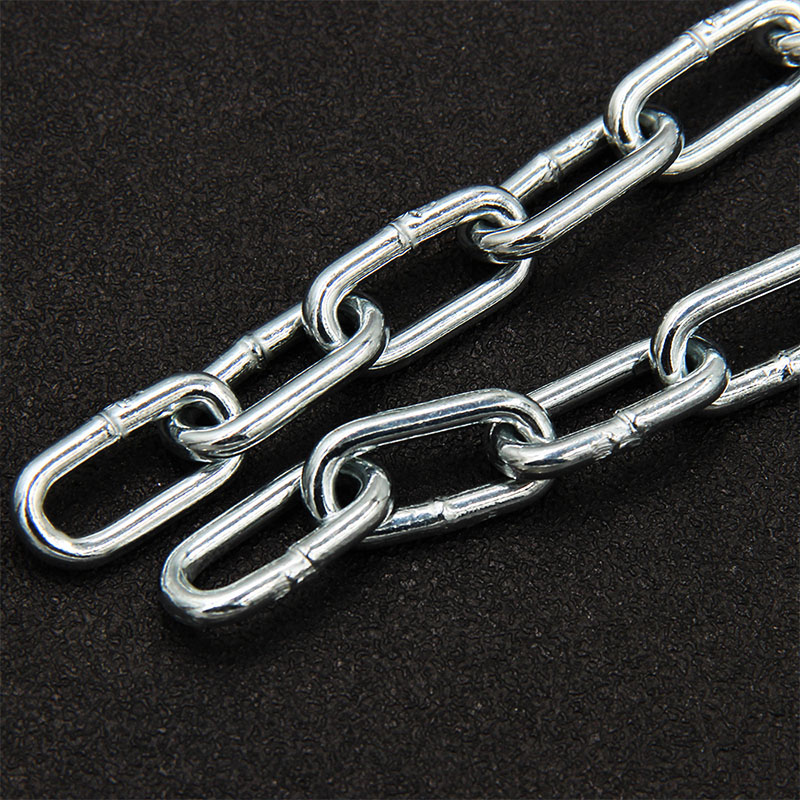
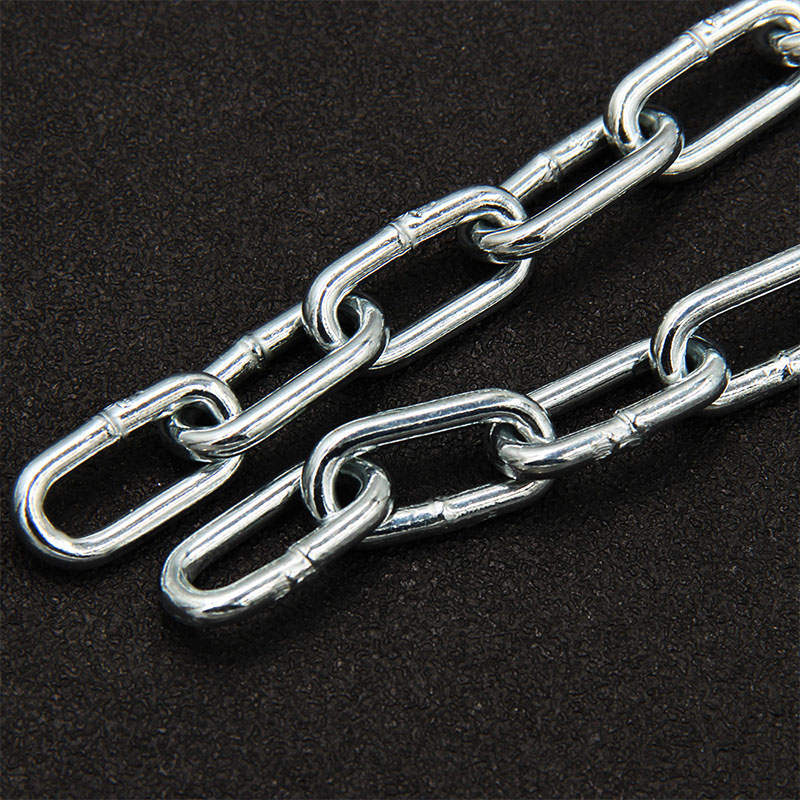
The self color finish indicates that the chain surface is not coated with zinc or other protective layers. This untreated surface condition preserves the original metallurgical properties of the steel and ensures accurate dimensional tolerances. It also allows for easier inspection of weld integrity and surface defects.
However, the absence of coating means that corrosion resistance is limited when exposed to humid or corrosive environments. According to ISO corrosion standards, uncoated carbon steel is susceptible to oxidation when exposed to moisture and oxygen over time. For applications in outdoor or marine environments, additional protective measures such as oil coating or periodic maintenance are recommended.
Packaging Advantage of Round Pail System
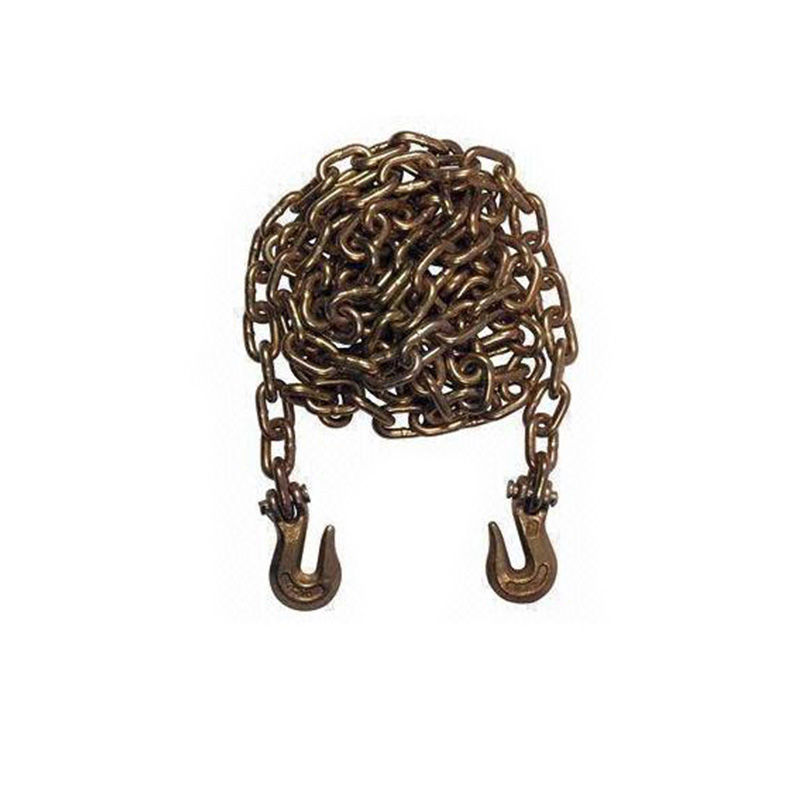
The round pail packaging system provides significant operational advantages compared to bulk or loose chain supply. The circular container allows the chain to be coiled uniformly, reducing internal stress and preventing kinks or tangling. This design enables smooth dispensing during use, which improves efficiency in industrial and logistics environments.
The pail also serves as a protective barrier against mechanical damage during transportation. It minimizes contact with external contaminants and reduces the risk of surface abrasion. In warehouse operations, round pails can be stacked efficiently, optimizing storage space and simplifying inventory management.
Typical Applications
Grade 43 Chain Self Color - Round Pail is widely used in applications where moderate strength and high flexibility are required. These include cargo lashing, trailer safety chains, agricultural equipment securing, and general-purpose binding. The chain is also commonly used in construction sites for temporary fixing and material handling tasks that do not involve overhead lifting.
Industry guidelines such as ASME B30.9 clearly state that Grade 43 chains are not suitable for overhead lifting applications. This restriction ensures that only higher-grade alloy chains such as Grade 80 or Grade 100 are used in critical lifting operations. Using the correct chain grade based on application requirements is essential for maintaining safety and compliance with international standards.
Parameter
Grade of Chain: NACM (National Association of Chain Manufacturers & ASTM (American Society for Test Materials) classify chains in various grades. The higher the grade, the higher the working load limit for the same size of chain.
Working Load Limit (WLL): (rated capacity) Is the maximum working load that should be applied In direct tension to an undamaged straight length of chain.
Proof Test: (manufacturing test force) Is a term designating the minimum tensile force which has been applied to a chain under a constantly increasing force In direct tension during the manufacturing process. These loads are manufacturing integrity tests and shall not be used as criteria for service or design purpose.
Minimum Breaking Force: The minimum force at which the chain during manufacture has been found by testing to break when a constantly increasing force is applied in direct tension. Breaking force values are not guarantees that all chain segments will endure these loads. This test is a manufacturer’s attribute acceptance test and SHALL NOT be used as criteria for service and design purpose.
Overhead Lifting: The process of lifting that would elevate a freely suspended load to such a position that dropping a load would present a possibility of bodily injury or Property damage.
Technical Specifications Table
Nominal Size (in) | Pitch (mm) | Inside Width (mm) | Wire Diameter (mm) | Weight (kg/100m) | Working Load Limit (kg) | Proof Load (kN) | Breaking Force (kN) |
1/4 | 19.0 | 8.5 | 6.3 | 90 | 1180 | 23.1 | 46.2 |
5/16 | 22.0 | 10.5 | 7.9 | 140 | 1900 | 37.2 | 74.4 |
3/8 | 26.0 | 12.0 | 9.5 | 190 | 2650 | 52.0 | 104.0 |
1/2 | 32.0 | 15.0 | 12.7 | 330 | 4500 | 88.2 | 176.4 |
Dimensional Consistency and Manufacturing Tolerance
Dimensional tolerances are controlled in accordance with ISO 3077, which defines chain dimensions, pitch accuracy, and link geometry. Each chain link is calibrated to ensure uniform load distribution during operation. Variations in pitch or diameter can lead to uneven stress concentration, which may reduce fatigue life. Strict tolerance control ensures that the chain performs consistently under repeated loading conditions.
Load Rating Methodology
Working Load Limit values are calculated based on minimum breaking force divided by a safety factor. Industry standards such as ASTM and NACM define safety factors to ensure operational reliability. Proof load testing verifies that the chain can withstand loads above its working limit without permanent deformation. Breaking force values are established through destructive testing, where the chain is loaded until failure occurs.
Standards
Name: Grade 43 Chain Self Color – Round Pail
MOQ: 100 Meters
Package: Carton + Steel Pallet
Applicable International Standards
Grade 43 Chain Self Color - Round Pail is manufactured and tested in accordance with internationally recognized standards to ensure quality, safety, and interchangeability. Key standards include:
NACM Welded Steel Chain Specifications
ASTM A391 Standard Specification for Grade 43 Chain
ISO 3077 Short Link Chain Dimensions and Tolerances
ASME B30.9 Slings Safety Standard
These standards define requirements for material composition, mechanical properties, dimensional accuracy, and testing procedures.
Quality Control and Testing Procedures
Each production batch undergoes rigorous testing to ensure compliance with standard requirements. Proof load testing is conducted on 100% of chains to verify structural integrity. Sample chains are subjected to breaking force tests to confirm minimum strength values. Non-destructive testing methods such as visual inspection and magnetic particle testing are used to detect surface defects and welding imperfections.
Certification and Traceability
All products are supplied with material certificates and test reports that provide full traceability from raw material to finished product. Certification typically includes chemical composition analysis, mechanical property verification, and compliance statements referencing applicable standards. This level of documentation ensures that the chain meets the requirements of industrial users, distributors, and regulatory authorities worldwide.