The Challenge of Bottom Ash Removal in Thermal Power Plants
In coal-fired thermal power plants, the combustion of coal in boilers continuously generates bottom ash—a heavy, abrasive, high-temperature by-product that accumulates at the furnace bottom. This ash, which can reach temperatures up to 1200°C, must be safely and continuously removed to maintain stable boiler operation and prevent costly shutdowns.
Traditional ash removal methods—such as water sluicing or dry handling—often present significant challenges: high water consumption, dust emissions, space requirements, and maintenance complexity. The Submerged Scraper Conveyor (SSC) , also known as a submerged ash conveyor system, has emerged as the industry's preferred solution for this demanding application.
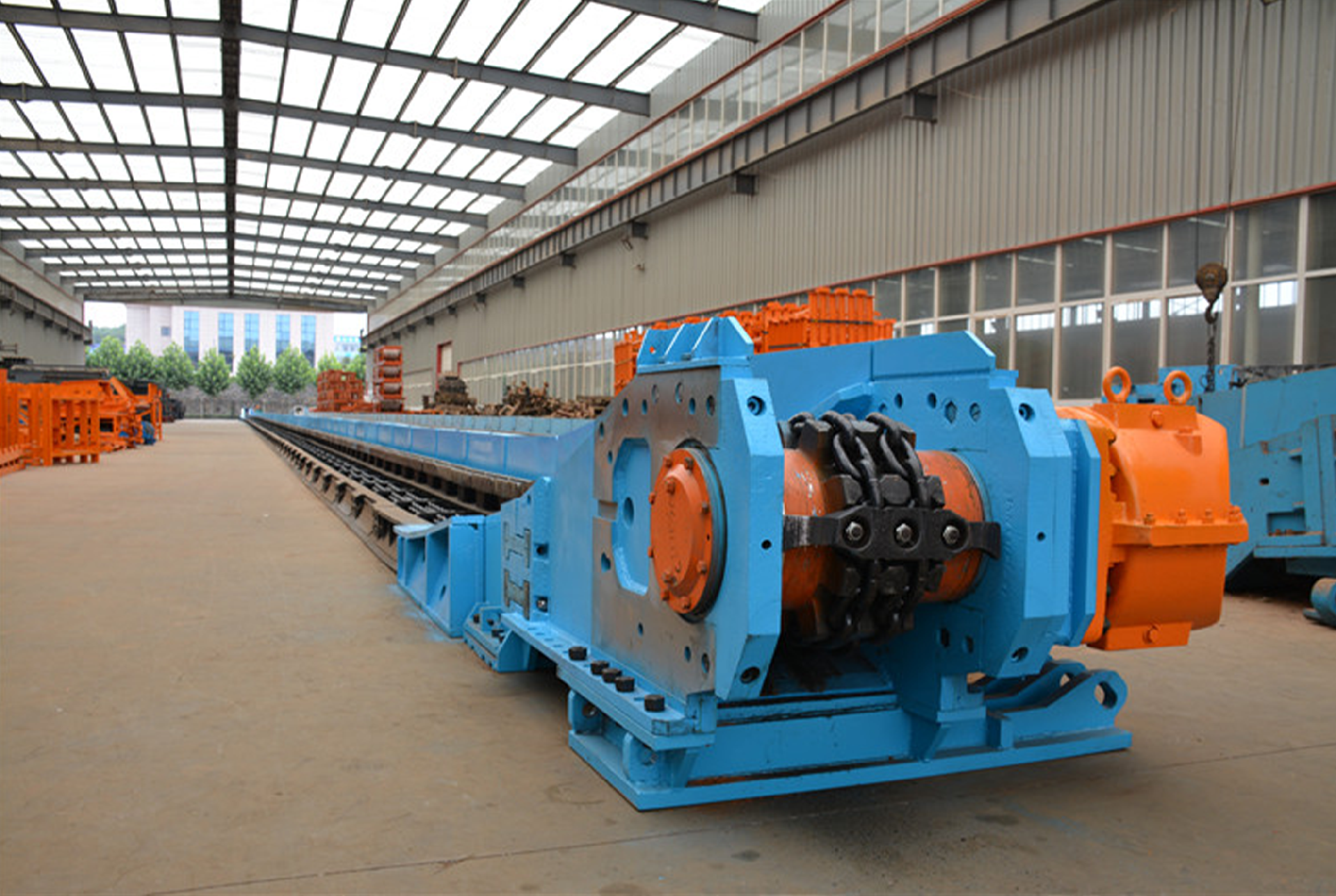
An SSC is a double-strand chain conveyor designed specifically to handle high-temperature materials that drop into a water-filled trough. The water bath quenches the hot ash, suppresses dust, and creates a critical water seal that prevents air ingress into the boiler—maintaining the furnace's negative pressure and enabling safe, continuous operation.
How Submerged Ash Conveyor Systems Operate
The Working Principle
A typical SSC consists of a steel trough filled with water, positioned directly beneath the furnace discharge opening. Hot bottom ash falls from the boiler into the water-filled trough, where it is immediately quenched and cooled.
Continuous round steel link chains—equipped with scraper bars or flights—travel along the floor of the trough. As the scraper bars move, they push the ash along the horizontal section of the trough and up an inclined dewatering section. During this ascent, gravity allows excess water to drain from the conveyed material. The effectively dewatered ash then drops off the end of the inclined section into a transfer chute or storage area.
The chains run over idlers, shafts, and submerged overhung idlers (SOI), with the return strands traveling on dry wear rails beneath the water-filled section. The scraper flights then begin a return cycle—passing under the water-filled trough and through an exposed dry trough area—to re-enter the water and repeat the process.
Key Design Features
| Component | Function |
|---|
| Water-filled trough | Quenches hot ash, suppresses dust, maintains water seal |
| Double-strand round link chains | Provide continuous, reliable traction |
| Scraper bars/flights | Push ash along trough bottom and up incline |
| Inclined dewatering section | Allows water drainage before discharge |
| Submerged overhung idlers (SOI) | Support chain and monitor operation |
| Wear-resistant trough lining | Protects against abrasive ash contact |
| Water seal at furnace inlet | Prevents air ingress and maintains boiler pressure |
Operational speeds are very low—typically around 0.03 m/s—which minimizes wear while ensuring continuous material movement. The entire SSC assembly is often mounted on wheels and can be rolled out from under the furnace on rails, providing complete access for maintenance.
The Critical Role of Chains in SSC Systems
Chains are the heart of every submerged scraper conveyor system. They bear the entire mechanical load of the system—dragging scraper flights and tons of abrasive ash through the water-filled trough, day after day, year after year.
The operating environment for SSC chains is among the most demanding in any industrial application:
Extreme temperatures: Ash enters the system at up to 1200°C
High abrasion: Bottom ash contains hard, sharp particles that act like grinding media
Corrosive conditions: Water and sulfur compounds create chemically aggressive environments
Continuous operation: Power plants run 24/7, with maintenance windows measured in hours, not days
Heavy mechanical loading: Chains must drag scraper flights and ash loads weighing several tons
Chain Failure Modes in SSC Applications
Understanding how chains fail in SSC environments is essential for selecting the right product:
Abrasive Wear is the most common failure mode. The continuous sliding contact between chain links, scraper attachments, and abrasive ash particles gradually wears away material. When the chain diameter is reduced beyond acceptable limits, the chain's load-bearing capacity is compromised.
Corrosion accelerates wear, particularly in the presence of sulfur compounds and moisture. The synergy of abrasive wear and corrosion—often called tribocorrosion—can dramatically shorten chain life.
Fatigue occurs due to the cyclic loading as chain links articulate around sprockets and idlers. Repeated stress cycles can lead to crack initiation and propagation at link joint holes.
Elongation results from cumulative wear at link contact points. When chain pitch elongates beyond approximately 3%, the chain no longer meshes properly with sprockets, leading to accelerated wear of both chain and sprockets.
Chain Solutions for SSC Applications
To withstand these extreme conditions, SSC chains must be manufactured from high-strength alloy steels with advanced heat treatment processes.
Material selection is the first critical factor. Premium SSC chains are manufactured using CrNi (chromium-nickel) or CrNiMo (chromium-nickel-molybdenum) alloy steels. These alloys provide excellent resistance to both abrasive wear and corrosive attack.
Case hardening (also known as carburizing) is the most important heat treatment for SSC chains. This process adds carbon to the chain's surface layer, creating a hard, wear-resistant exterior while maintaining a tough, ductile core.
Key specifications for high-quality SSC chains typically include:
Surface hardness exceeding 800 HV30 (approximately 64 HRC)
Total carburizing depth of 0.11d to 0.16d (d = chain diameter)
Effective case hardening depth (CHD 550 HV1) of 0.07d to 0.10d
Minimum breaking force in the 400-1000 kN range depending on chain diameter
Chain Types for SSC Systems
Two primary chain geometries are used in SSC applications:
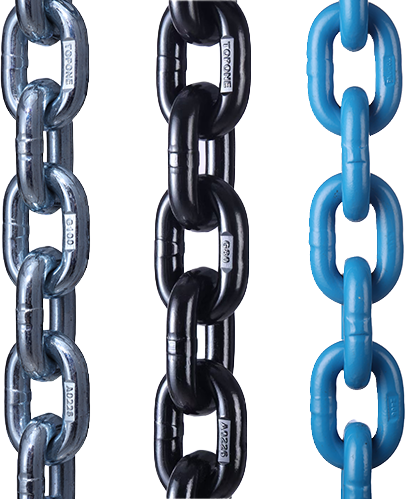
Round link chains are formed from round steel bars, welded at the joint. They offer:
Smooth articulation around sprockets
Simple inspection and maintenance
Good flexibility
Cost-effectiveness for moderate-duty applications
Superior performance in the most aggressive high-temperature conditions (up to 1200°C)
Forged link chains are hot-worked from solid steel, with the forging process aligning the metal grain for enhanced strength. They offer:
Superior fatigue resistance
Higher impact strength
Better resistance to bending and deformation
Longer service life under heavy loads and impact conditions
Ideal for lower capacities and temperatures up to 650°C
TOPONE CHAIN Solutions for Submerged Ash Conveyor Systems
At TOPONE CHAIN, we understand the extreme demands of bottom ash handling in thermal power plants. Our SSC chain solutions are engineered to deliver exceptional wear resistance, high tensile strength, and long service life in the most challenging environments.
Key Features of TOPONE SSC Chains
| Feature | Benefit |
|---|
| CrNi/CrNiMo alloy steel | Superior resistance to abrasion and corrosion |
| Deep case hardening | Extended wear life with hardened surface and tough core |
| Surface hardness > 800 HV30 | Exceptional resistance to abrasive ash contact |
| High tensile strength | Withstands heavy mechanical loads and continuous operation |
| Precision calibrated | Consistent dimensions for reliable sprocket engagement |
| Low elongation rate | Maintains pitch accuracy over extended service life |
Quality Assurance
Every TOPONE SSC chain is manufactured under rigorous quality control protocols. Our heat treatment processes are precisely controlled to achieve the optimal balance of surface hardness and core toughness. Each chain is carefully calibrated to ensure consistent dimensions and reliable performance.
Benefits of Submer