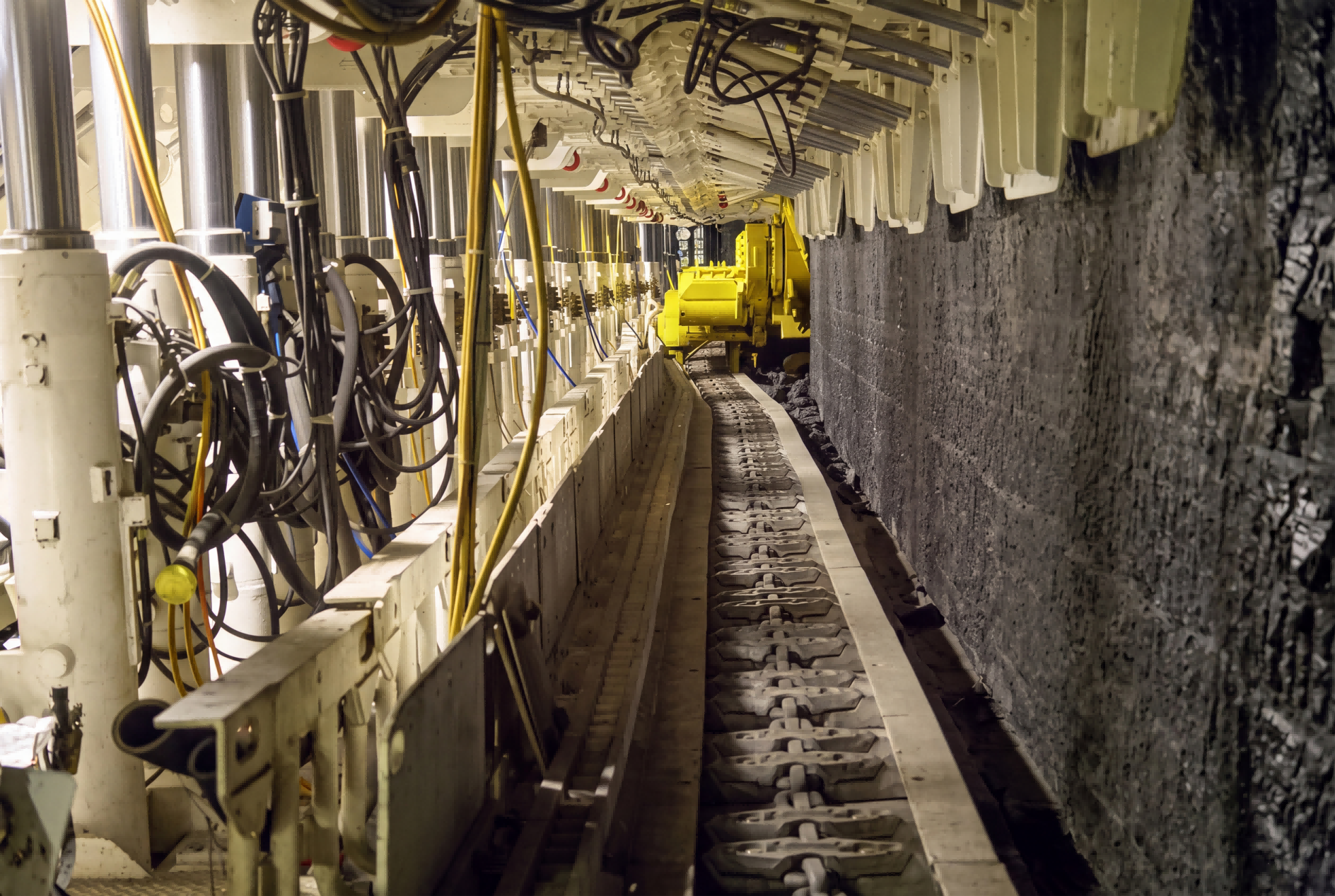
A scraper coal feeder extracts coal from a bunker or transfer point and moves it through an enclosed trough with chain-mounted flights. Chain speed and bed depth determine volumetric output. Verified mass flow requires an approved weighing system; chain speed alone is not gravimetric measurement.
Typical Applications
Coal feeding systems
Boiler fuel transport
Thermal power fuel handling
Coal storage transfer
Power plant conveying systems
Match the Chain to the Feeder
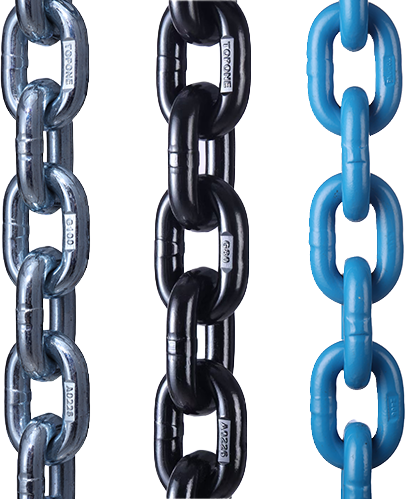
Calibrated Round-Link Chain
Round steel link chain can operate with pocket or toothed wheels and flight attachments. ISO 610:1990 covers high-tensile round-link chains for chain conveyors and coal ploughs; DIN 764 and DIN 766 are also used for calibrated conveyor geometry. Standard, diameter, pitch, grade and tolerance must match the wheel. A lifting chain of similar diameter is not interchangeable.
Forged or Pin-and-Bush Chain
Other feeders use drop-forged scraper, block or engineering pin-and-bush chain. ISO 1977:2006 covers conveyor chains, attachments and sprockets. Pitch, width, pins, bushes, flight pattern and tooth form must match as one system. New chain on incompatible or heavily worn sprockets develops impact and rapid pitch wear.
Capacity and Chain Pull
Volumetric mass flow may be estimated by:
Q = 3600 A v ρ φ
A is the material cross-section in m²
v is the chain speed in m/s
ρ is the coal bulk density in t/m³
φ is the filling factor
Project data must define coal density, moisture, particle-size range and compaction.
Chain pull includes material drag, chain-and-flight resistance, incline, return resistance and acceleration. Loaded starts, compacted coal, misalignment or blocked discharge can exceed running load. Check drive torque, start method, overload protection and the OEM service factor. Conveyor chain is selected by working pull and operating duty, not lifting-chain WLL.
Material and Manufacturing
Coal causes abrasive wear, moisture-related corrosion and fatigue. Case-hardened alloy chain can combine a hard contact surface with a tougher core. For suitable round-link conveyor chain, a published reference range is 0.10d–0.21d total carburized depth, where d is the link diameter, with surface hardness above 64 HRC available.
These are not universal TOPONE values. The order must confirm steel grade, case depth, core properties, surface hardness and heat-treatment process.
Manufacture requires controlled forming, butt welding, heat treatment and dimensional calibration. Inspection should verify material identity, diameter, pitch, width, matched length and mechanical properties. Twin strands should be supplied as matched pairs and tensioned equally.
Wet, sulphur-bearing coal requires a corrosion review using pH, chlorides, moisture, temperature and mineral content. Stainless steel is not an automatic solution because corrosion resistance alone does not ensure sufficient abrasive-wear performance.
Upstream fuel feeders normally do not experience the same temperature as bottom-ash conveyors. High-temperature chain should only be specified from the measured service temperature.
Flights, Wheels and Trough
Flight spacing must match the attachment pitch. Tooth profile, pitch diameter, wheel alignment, liner wear, flight clearance, take-up travel and chain sag must be checked as one system.
Excessive tension increases chain and wheel contact wear. Insufficient tension permits chain jumping and impact. Replaceable teeth or wheel segments are suitable only when their material, hardness and geometry remain compatible with the chain.
Inspection and Replacement
Record baseline chain pitch and link-section measurements after installation. Conveyor-chain guidance recommends a preliminary inspection after approximately 100–150 operating hours. Subsequent checks are commonly performed every one to three months, although shorter OEM intervals take priority.
Inspection should cover both strands, welded areas, contact wear, corrosion pits, distorted links, connectors, flight fasteners, sprocket teeth and take-up position.
For toothed-wheel systems, 3% pitch extension is a published general replacement reference, not a universal allowable limit. The lower OEM limit, available take-up limit or approved plant criterion governs removal from service.
Operational Safety
Guards and interlocks are required around access covers, drives, shafts and take-up mechanisms. Before clearing compacted coal or entering the trough, all electrical and stored mechanical energy must be isolated and verified. Coal-dust and fire controls must follow the plant’s approved hazard assessment.
Information Required by TOPONE
Feeder model and arrangement drawing
Chain type, standard, size, grade and strand count
Chain length, flight spacing and attachment drawing
Sprocket teeth, pitch diameter and tooth profile
Required capacity, speed, length and inclination
Coal density, lump size, moisture and temperature
Drive torque, starting method and overload setting
Operating hours, start frequency and jam conditions
Corrosion exposure, wear records and certificates