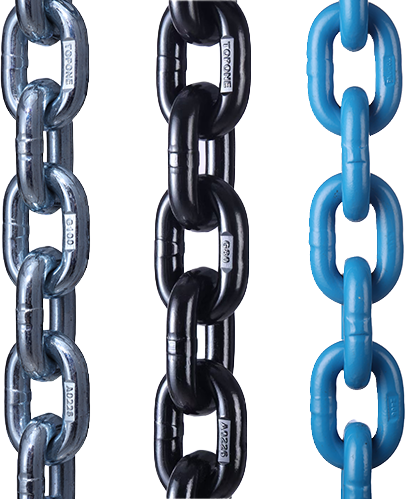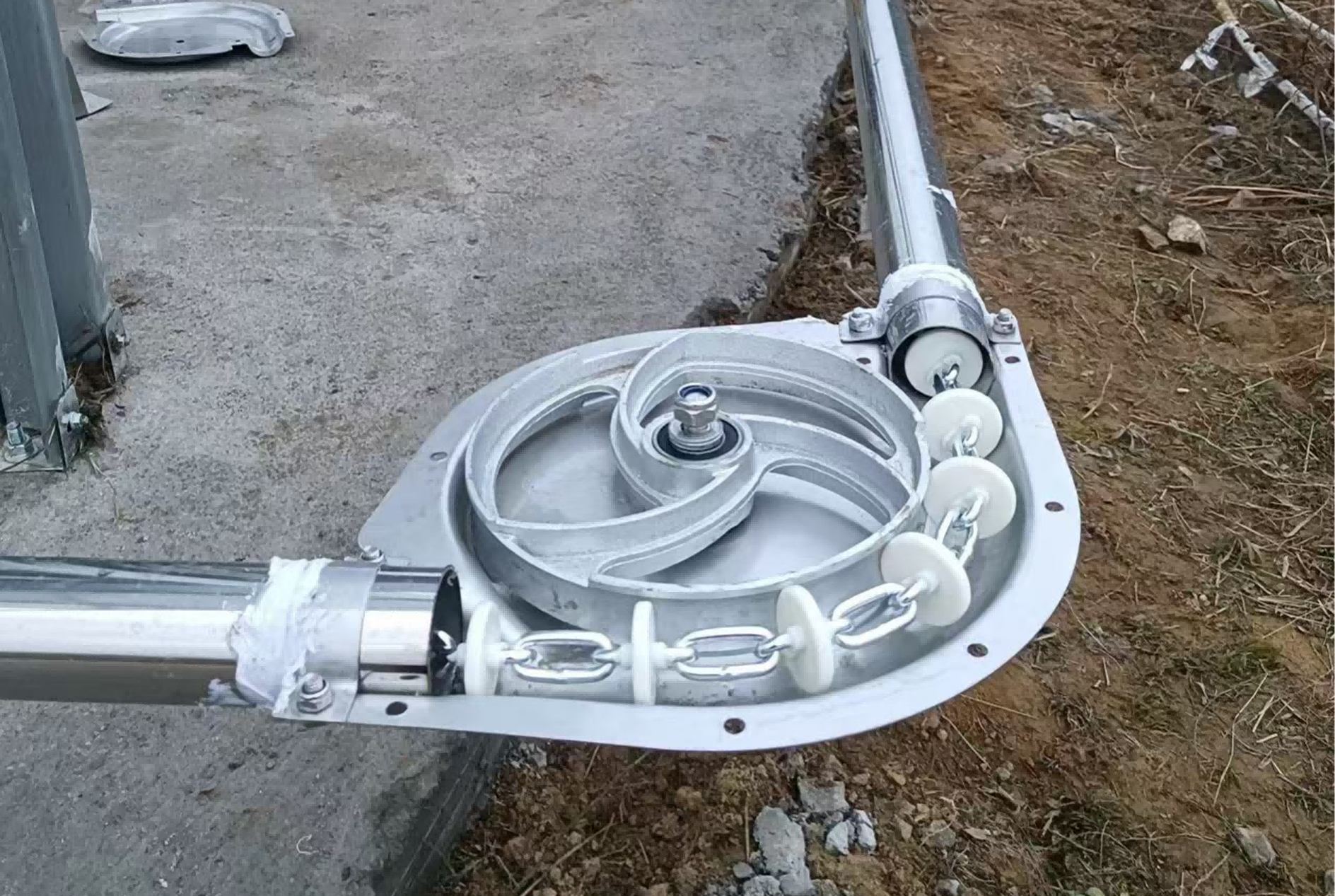
Disc-and-tube systems move dry feed through an enclosed pipeline using polymer discs fixed to a continuous steel chain. A sprocket pulls the chain through tubes and corners while a tensioner controls slack. Reliable distribution depends on the complete circuit, not chain strength alone.
Typical Applications
Poultry feeding systems
Pig farm feeding lines
Automatic feed distribution
Livestock nutrition transport
Closed breeding facilities
System Structure and Operation
Matched Conveying Circuit
A circuit includes the hopper, tubes, corners, disc chain, sprocket, gearbox, tensioner, outlets, and sensors. The chain supplies traction while the discs displace feed. Chain pitch, disc spacing and diameter, tube bore, corner groove, and sprocket pockets must form one matched design.
A chain-disc assembly is not interchangeable with a cable-disc system. Their connections, tension, drive engagement, and inspection differ. Lifting chain, roller chain, or general-purpose chain must not be substituted because its geometry is not designed for disc attachment, tube clearance, or the drive wheel.
Capacity and Chain Pull
A screening equation for feed delivery is:
Q = 3600 × A × v × ρ × φ
Q is mass flow when units are consistent, A is effective feed area, v is chain speed, ρ is bulk density, and φ is filling factor. Pellet size, mash flowability, oil, moisture, tube bore, disc spacing, outlets, and feed return affect actual capacity.
Chain pull includes feed friction, chain and disc weight, lift, corners, loaded starts, and blockage resistance. Drive power can be screened from P = F × v ÷ η. Final chain load, power, and overload setting must come from equipment calculations, not a generic motor rating.
Chain and Disc Selection
Steel Chain
Feeding chain requires controlled pitch, sound welds, wear resistance, and core toughness. Links articulate at sprockets and corners; hardness alone does not establish impact or fatigue performance. Specify material, welding, heat treatment, calibration, tensile verification, and fatigue testing together.
Humid barns expose steel to condensation, ammonia, dust, and residue. Coated alloy-steel chain may be used only when the finish is compatible with heat treatment and the finished chain is requalified. Stainless steel must be supplied without an added coating and still requires wear evaluation.
Polymer Discs
Select the engineering polymer for feed oils, moisture, cleaning chemicals, temperature, and corner contact. Discs must remain concentric, resist slipping or cracking, and retain tube clearance. Material and diameter cannot be selected independently from chain pitch, sprockets, and corners.
Feed Quality and Hygiene
An enclosed tube reduces open exposure and dust release; it is not sterile. Feed can remain at low points, outlets, corners, and the tensioner, creating caking or microbial risk after moisture entry.
ISO 14159:2002 provides general hygienic-design principles. Provide inspection access, limited crevices, cleanable surfaces, drainage, and complete drying. Wet cleaning is appropriate only when the chain, tubes, bearings, electrical equipment, and drying procedure are designed for it.
High speed, overfilling, sharp corners, or worn discs can increase pellet breakage and ingredient separation. Verify distribution by weighing discharge from representative outlets instead of assuming equal flow.
Controls and Inspection
Monitor motor current, tension, hopper level, outlets, and circuit completion. Rising current can indicate packed feed, a seized corner bearing, or excessive tension. Overload protection should stop the drive before damage. Guard drive and tension points and isolate mechanical and electrical energy before access.
Record initial chain length over defined pitches. Inspect pitch growth, link wear, welds, corrosion, disc movement, tube grooving, sprocket pockets, corners, bearings, tensioner travel, and outlet flow. Apparent chain “stretch” commonly results from contact wear.
Reinspect after blockage, overload trip, water ingress, broken discs, abnormal noise, or uneven delivery. Apply equipment-specific discard limits, not a lifting-chain wear percentage. Replace parts with matched geometry and identify the cause before restart.
Information Required by TOPONE
Chain and disc drawing
Tube bore, circuit length, corners, and vertical lift
Feed type, density, particle size, moisture, and oil content
Capacity, speed, outlets, and starts per day
Sprocket, corner, tensioner, and connection details
Material, finish, force, fatigue, and certificate requirements