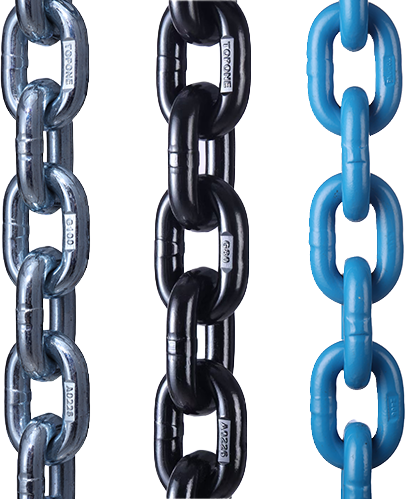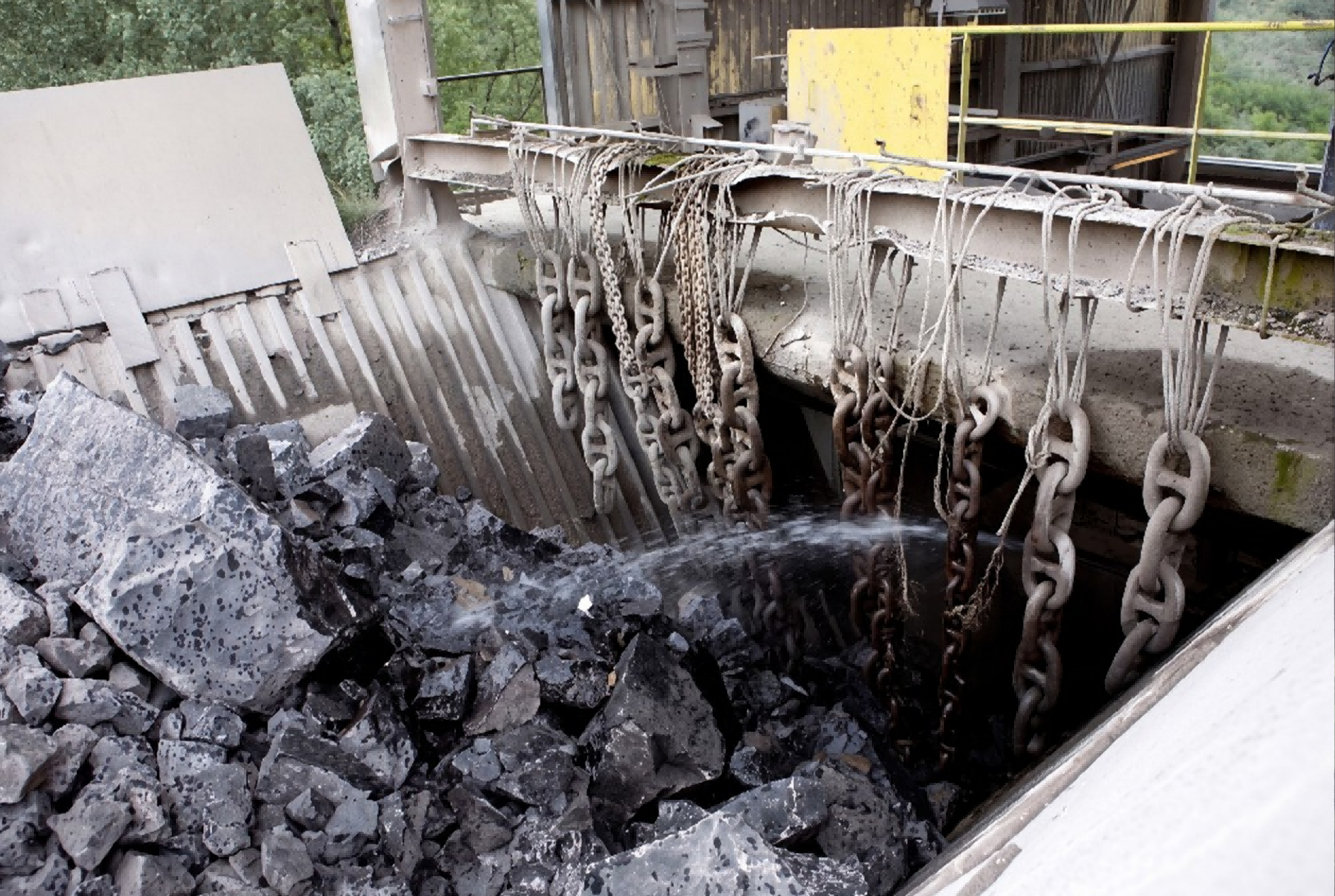
Crusher feed systems receive run-of-mine stone, ore, coal, and aggregate before crushing. Traction components must withstand chute pressure, lump impact, abrasive fines, loaded starts, and jamming. Capacity in tonnes per hour does not determine chain size by itself.
Typical Applications
Heavy crusher feeding
Ore processing systems
Stone crushing plants
Aggregate production lines
Bulk material handling
Identify the Feeder Structure
Apron or Plate Feeders
Apron feeders carry large, sharp-edged lumps on overlapping steel pans connected between two heavy pin-and-bush or forged chain strands. ISO 1977 specifies characteristics for general conveyor chains, attachments, and sprockets, but a mine apron-feeder chain and pan assembly is normally selected to the equipment drawing.
Do not substitute round-link chain only because its breaking force is high. Pitch, pin and bush diameters, roller form, attachments, rails, and sprocket profile must match the feeder.
Scraper or Chain Feeders
Where flight bars drag coal, crushed ore, or smaller mineral feed through a trough, DIN 22252 round-link chain can provide traction. DIN 22252:2012-07 applies to round steel link chains for continuous conveyors and mining equipment. DIN 22255 flat-link chain is used where the conveyor profile lacks height for a round vertical link.
A complete system combines matched strands, flight bars, compatible DIN 22253 or DIN 22258 connectors, sprockets, take-up equipment, and overload protection. All parts must match chain diameter, pitch, and grade.
Vibratory Feeders
A vibratory feeder normally has no traction chain in the material path. Its suspension, restraint, and maintenance-lifting chains require separate selection standards.
Verified TOPONE Chain Data
DIN 22252 Round-Link Example
TOPONE 30 × 108 mm round-link chain has nominal diameter 30 ±0.9 mm, pitch 108 ±1.1 mm, and mass 18.0 kg/m.
Grade C has an 850 kN test force, 1,130 kN minimum breaking force, maximum 1.6% elongation at test force, minimum 14% elongation at break, and minimum fatigue resistance of 70,000 cycles. Grade D provides 1,050 kN test force, 1,400 kN minimum breaking force, maximum 1.9% elongation at test force, minimum 16% elongation at break, and minimum fatigue resistance of 90,000 cycles.
These are chain-specimen verification values, not permissible feeder pull. Do not divide breaking force by an assumed safety factor to create an operating rating. Grade D is not an automatic upgrade if connectors, sprockets, flights, or drive protection remain rated lower.
Calculate Capacity and Chain Pull Separately
Material Capacity
A screening equation for continuous volumetric feeding is:
Q = 3600 × A × v × ρ × φ
Q is t/h, A is loaded area in m², v is speed in m/s, ρ is bulk density in t/m³, and φ is filling factor. Confirm the result against lump size, hopper opening, bed depth, moisture, and flow behavior.
Design Chain Pull
Include resistance from material, chains and flights, return run, incline, acceleration, sprockets, and starting beneath a loaded hopper. Apply impact and jam factors specified by the feeder designer. For twin strands, do not assume an exact 50/50 split: uneven feed, misalignment, and unequal strand length can overload one side.
Check motor starting torque, gearbox ratio, sprocket pitch radius, and torque-limiter setting against the permissible force of the complete system. The weakest chain, connector, flight attachment, sprocket, or shaft governs.
Wear Control and Inspection
Abrasive fines wear link crowns, contact zones, connectors, flights, trough plates, and sprocket pockets. Specify alloy steel, welding, heat treatment, calibration, and testing together; hardness alone does not establish impact resistance or fatigue life.
Record initial multi-link gauge length and inspect pitch growth over the same links under the specified measuring force. Check diameter loss, welds, twist, pitting, connector locking, flight alignment, sprocket wear, take-up travel, and strand synchronization. Apply DIN, equipment, or project discard limits, not a universal wear percentage. Replace damaged paired strands as a controlled set and investigate the cause before restart.
Information Required by TOPONE
Feeder type and equipment drawing
Material, lump size, bulk density, moisture, and temperature
Capacity, speed, incline, bed depth, and loaded-start condition
Maximum chain pull and drive torque
Chain arrangement, pitch, strand spacing, sprocket, connector, and flight details
Required grade, surface condition, testing, and certificates