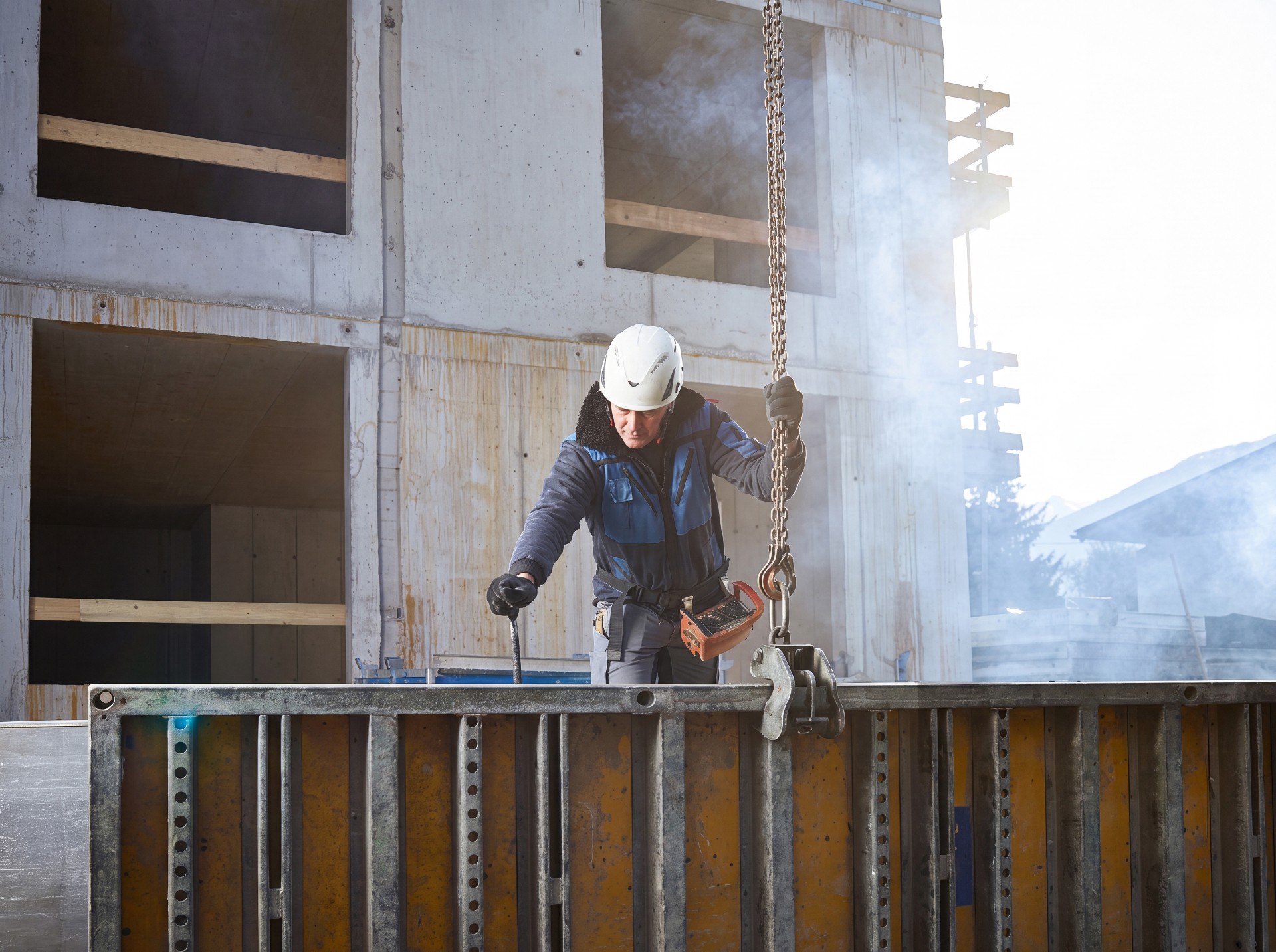
Construction lifting often involves long steel beams, trusses, precast concrete units, pipe sections, fabricated frames and modular assemblies. These loads may have offset centres of gravity, lifting points at different heights and limited headroom. A chain sling must therefore be selected as a complete assembly, not by chain diameter alone.
Typical Applications
Steel structure erection
Bridge girder and segment installation
Precast concrete handling
Modular building assembly
Pipe and fabricated frame lifting
Construction equipment positioning
Infrastructure maintenance
Selecting the Sling Configuration
The lift plan should confirm the load mass, centre of gravity, rated lifting points, crane-hook dimensions, available headroom, hitch method and angle of every sling leg.
A single-leg sling suits one engineered lifting point or controlled positioning. A two-leg sling supports beams, pipe assemblies and frames with two rated lifting points. Three- and four-leg assemblies suit modules or precast units with multiple lifting points, but the load must not be assumed to divide equally between all legs. An asymmetric load requires leg-force assessment by a qualified lifting professional.
TOPONE G80 adjustable chain slings allow individual leg reach to be set before loading, helping place the crane hook above the verified centre of gravity. Adjustment must use the designated shortening components; twisting the chain or using bolts as shortening devices is not permitted.
Chain slings can be combined with an engineered lifting or spreader beam, rated shackles and approved lifting points. This can control sling angle and inward force when handling long or deformation-sensitive structures. Every interface must fit correctly, and the complete system is limited by its lowest-rated component.
Load Angle and Working Load Limit
As a sling leg moves farther from vertical, its tension rises. WLL must be taken from the table for the exact leg count, hitch and angle range. Here, the angle is measured between each leg and the vertical.
Verified TOPONE catalog example for 10 mm G80 adjustable assemblies:
Single leg: 3.15 t
Two legs, up to 45°: 4.41 t
Two legs, over 45° and up to 60°: 3.15 t
Three or four legs, up to 45°: 6.61 t
Three or four legs, over 45° and up to 60°: 4.72 t
These values apply only to the stated TOPONE configurations and must not be transferred to a different hook, master link, hitch or assembly. Do not extrapolate beyond 60°; revise the geometry or use an engineered lifting arrangement. The catalogued safety factor is 4:1, but this never permits loading above the marked WLL.
Materials, Components and Manufacture
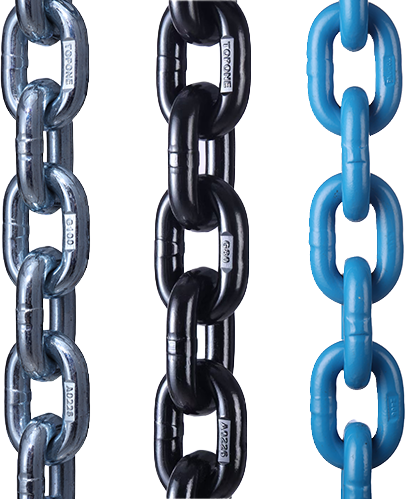
TOPONE G80 chain sling assemblies are catalogued to EN 818-4. They use Grade 8 short-link alloy-steel chain with matching master links, connecting links and lifting hooks. The components are described as forged from special quenched-and-tempered alloy steel and marked with specification, grade, traceability code and brand.
Surface options in the catalog include polishing, black oxide, plastic coating, galvanizing and painting. The finish must be confirmed for the actual exposure and does not increase WLL.
Self-locking hooks may be used where they seat correctly in a rated lifting point. Load must bear in the hook bowl, not on the tip, latch or side. The master link must match the crane hook and articulate freely without crowding.
Inspection and Site Control
Before use, a competent person should verify identification and inspect chain, welds, links, connectors and hooks for wear, cracks, gouges, stretch, bending, heat discoloration, corrosion or other deformation. A damaged assembly or one with unreadable identification must be removed from service.
Avoid shock loading, dragging, side-loading hooks and field repairs. Sharp edges require an engineered protection method. Confirm balance with a controlled initial lift before moving the structure.
TOPONE Solution
TOPONE can configure G80 single-, two-, three- and four-leg chain slings, including adjustable versions, around the verified load, lifting-point layout and required reach. Final selection must follow the marked WLL of the supplied assembly, the approved lift plan and applicable job-site regulations.