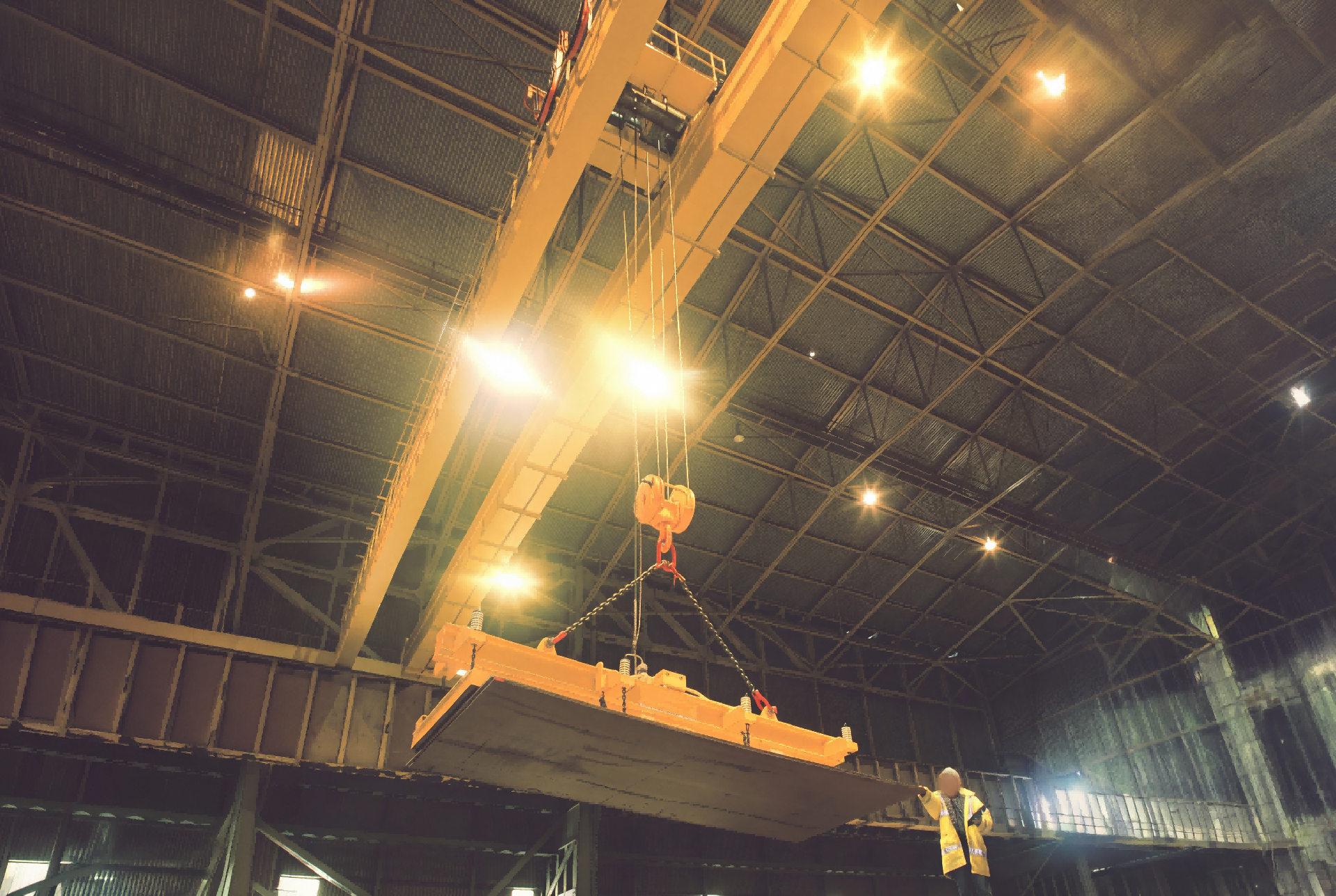
Shipyards, vessels and offshore facilities use chain hoists to position engines, pumps, pipe sections and structural parts where crane access is restricted. Engine rooms require compact equipment selected for load, headroom, suspension, moisture and hazardous-area conditions.
Marine Maintenance Applications
Engine and Machinery Positioning
Lift engines, motors, pumps and gearboxes from designated lifting points or an engineered frame. Suspended mass includes equipment, lifting beam, slings, shackles and attachments. Use engineered support before personnel work beneath the component.
Pipe Installation and Onboard Repair
Chain hoists can align pipe spools, valves and fabricated sections. Pipework, cable trays and handrails are not suspension points. Use an approved padeye, beam, trolley, gantry or temporary structure with verified capacity and load direction.
Offshore and Port Equipment Servicing
Fixed lifting points support maintenance of winches, deck machinery and port equipment. Where two hoists handle one component, do not assume equal loading. Center of gravity, hook spacing and structural deflection must be included in the lift plan.
Selecting a Marine Chain Hoist
Manual Chain Block Data
The TOPONE HSZ-C2 is rated at 2 t with 3 m lift, 3 t test load, 380 mm minimum hook distance, two falls of 8 mm chain and 14 kg net weight. The HSZ-C5 is rated at 5 t with 3 m lift, 7.5 t test load, 600 mm hook distance, two falls of 10 mm chain and 36 kg net weight. The HSZ-C10 is rated at 10 t with 3.5 m lift, 15 t test load, 700 mm hook distance, four falls of 10 mm chain and 68 kg net weight.
Electric Low-Headroom Hoist
TOPONE’s HHBB layout reduces the distance between hoist body and beam track. The HHBB-2.0B is catalogued at 2.0 t capacity, 3 m lift, 1.5 kW motor and 3.4 m/min lifting speed. It uses two falls of 7.1 mm chain and weighs 69 kg.
These data do not establish marine corrosion protection, ingress rating, duty class or explosion protection. Confirm voltage, controls, temperature and hazardous-area requirements before onboard use.
Marine Load Control
Vertical Lifting and Vessel Movement
Keep the hoist above the load and use a compatible trolley for horizontal travel. Never side-pull. A lift planned alongside must not automatically be repeated at sea. Roll, pitch and heave alter load effects, so afloat work requires operating limits and dynamic assessment from the responsible engineer.
Confined and Hazardous Spaces
Confirm access, lighting, communication and ventilation. Isolate electrical, hydraulic, pneumatic, mechanical and gravity energy before maintenance. Do not describe a standard electric hoist as explosion-protected without certification for the classified area.
Load Chain and Corrosion Control
Grade T Hoist Chain
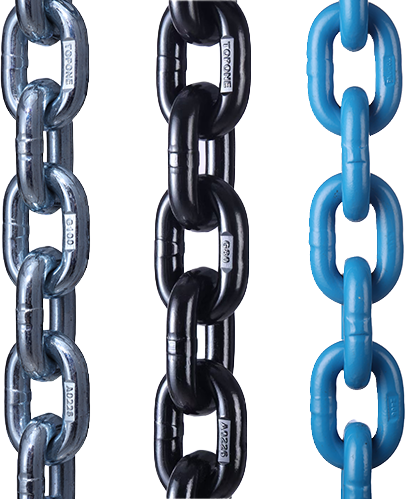
TOPONE identifies the HSZ-C load chain as high-grade alloy steel and its hooks as forged and heat-treated. ISO 3077 covers electrically welded, heat-treated and tested Grade T fine-tolerance chain from 3 mm to 22 mm.
Replacement chain must match the load wheel in diameter, pitch, inside width and material condition. Chain-sling chain is not a substitute. Cleaning, drying and lubrication after salt exposure must follow manufacturer instructions.
Inspection and Operating Limits
Inspection Points
Inspect support, suspension, trolley, identification, hooks, latches, brake, controls, limits, chain container and reeving. Check chain wear, elongation, twist, gouges, corrosion and stiff links against manufacturer limits. Remove abnormal equipment from service.
Never overload, shock-load, side-pull, lift people or allow personnel beneath a suspended load. Stop if the brake slips, chain jumps, support moves or abnormal sound occurs.
Marine Standards and Classification
EN 13157 applies to hand-powered chain blocks, EN 14492-2 to powered hoists, and ASME B30.16 to hand-chain, electric and air-powered hoists.
Where equipment forms part of an onboard lifting appliance, SOLAS II-1/3-13 applies from 1 January 2026. New regulated appliances require recognized class rules or equivalent Administration-accepted standards, load testing, examination, SWL marking and documentation.
Projects may reference DNV-ST-0377 for shipboard lifting appliances, DNV-ST-0378 for offshore lifting appliances, the ABS Guide for Certification of Lifting Appliances or the Lloyd’s Register Code for Lifting Appliances in a Marine Environment. A standard TOPONE catalogue hoist is not automatically class-approved; certification scope must be defined before ordering.