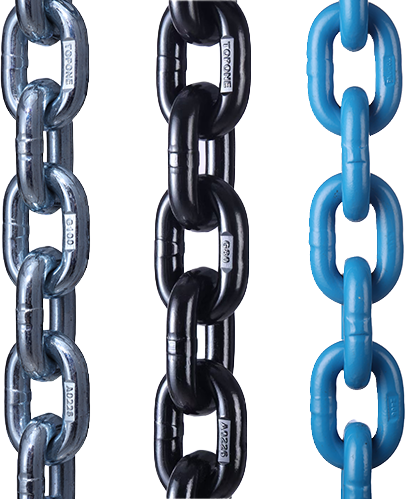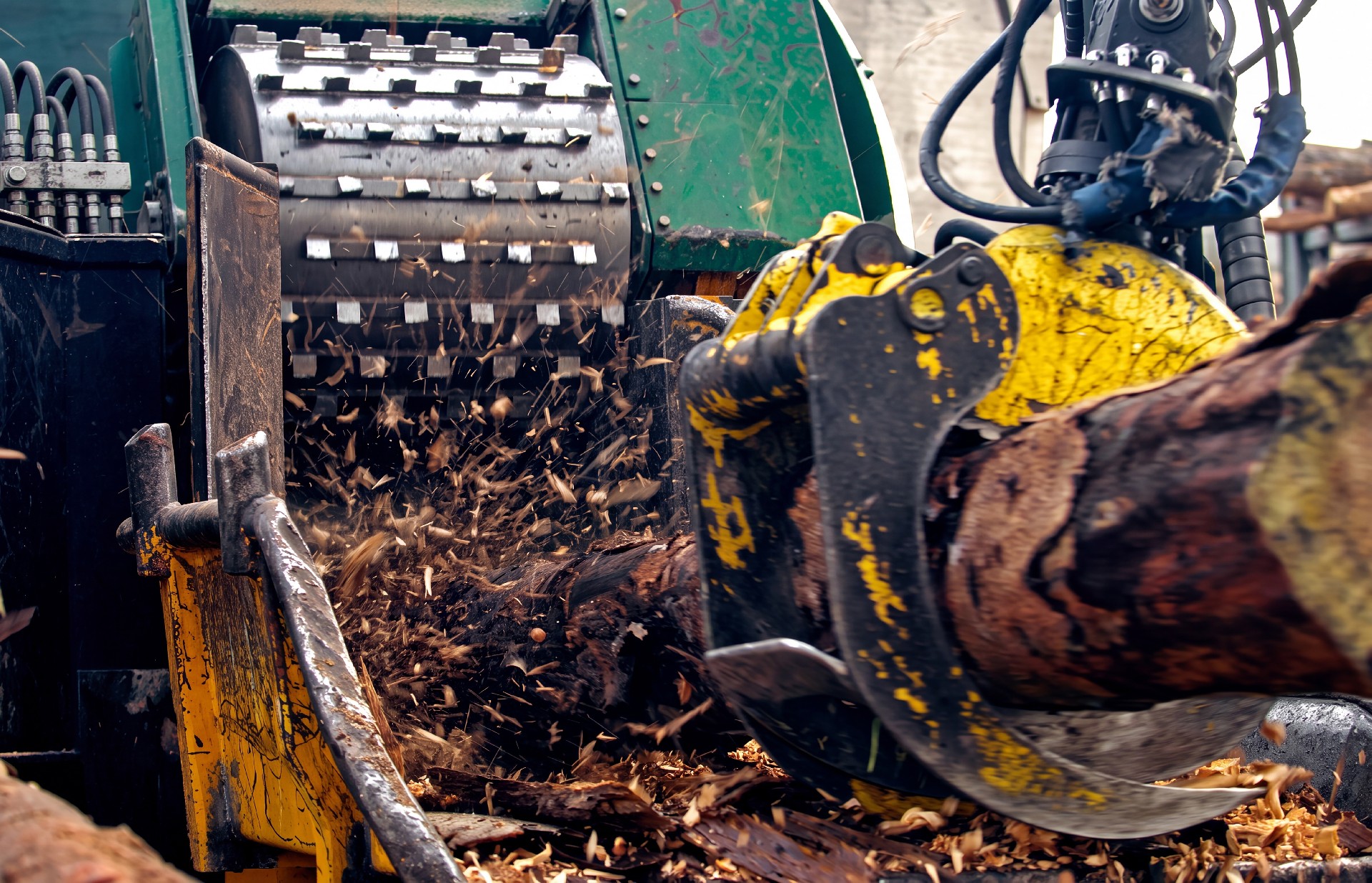
Wood-processing plants move logs, bark, chips and sawn material through receiving, debarking, chipping and sorting. Chains encounter dropped-log impact, uneven loading, abrasive bark and sand, moisture, sap and repeated starts.
Typical Applications
Debarking drum systems
Wood-processing plants
Paper-mill preparation lines
Timber-handling equipment
Sawmill production systems
Where Chains Are Used
Chains serve receiving decks, debarker infeed and outfeed, cross-transfers, chipper feed, bark conveyors and sorting lines. Not every debarking drum is chain-driven: its drive and support arrangement must follow the equipment manufacturer, while chains often move material before and after the drum.
Welded steel mill chain is suited to log decks and heavy transfers where logs create shock and sliding abrasion. Bush or roller conveyor chain with cradles, pushers or K-type attachments is appropriate where controlled pitch, alignment and repeatable positioning are required. Drag chain with flights moves loose bark, wood chips and sawdust through enclosed troughs. Sharp-top chain is reserved for applications that require positive grip on processed lumber; it should not be selected automatically for raw-log conveying.
Chain and Sprocket Selection
Selection starts with maximum log or bundle mass, hourly throughput, conveyor length, inclination, speed, number of loaded positions, starting frequency and contamination level. Required chain pull includes material resistance, chain and attachment weight, slope resistance, acceleration and material build-up:
Fdesign = Ks × (Fmaterial + Fchain + Fslope + Facceleration)
Approximate drive torque is:
Tdrive = Fdesign × rp ÷ η
Ks is the verified service factor, rp the sprocket pitch radius and η drivetrain efficiency. These equations do not replace the conveyor manufacturer's calculation. Chain, attachments, shafts, bearings, reducer and motor must be checked against the same design pull and starting torque.
Chain pitch, inside width, roller or barrel diameter and attachment spacing must match the sprocket and conveyor geometry. On paired strands, pitch and effective length must be matched so flights remain square and one strand is not forced to carry most of the load.
ISO 1977:2006 covers bush, plain and flanged roller conveyor chains, associated sprockets and attachments. It does not automatically cover welded steel, forged-link or proprietary chains.
Materials and Manufacturing
Carbon or alloy steel is selected according to calculated pull, impact, wear and environment. Welded steel chain uses formed sidebars, barrels, pins and controlled welds. Through-hardening can increase component strength, while induction-hardened pins, bushes or barrels can improve wear resistance at articulation and sprocket-contact surfaces. Heat treatment must preserve sufficient toughness for log impact.
Attachment position and weld quality matter because cradles and flights transfer load into the chain. Dimensional and weld inspection, mechanical testing and traceable records support repeatable assemblies. Coating can delay corrosion but cannot correct poor lubrication, trapped abrasive material or misalignment.
Published Process Reference
A documented Nordic mill used a 60 m log infeed conveyor, a 5.5 m diameter by 42 m debarking drum and logs up to 6 m. This external process reference is not a TOPONE supply claim. It shows why selection requires actual conveyor geometry, log flow and starting conditions.
Inspection and Maintenance
Inspect pitch elongation across several pitches, pin and bush wear, cracked welds or sidebars, stiff joints, worn rollers or barrels, distorted attachments and hooked sprocket teeth. Check guide rails, shaft alignment, strand-to-strand length and take-up travel. Remove packed bark, sand and wood fragments that can restrict articulation or accelerate three-body abrasion.
Stop and isolate every energy source before clearing a jam or entering a guarded area. In the United States, servicing is governed by OSHA 29 CFR 1910.147, while chain and sprocket guarding is addressed by 29 CFR 1910.219; local regulations and the machine manufacturer's instructions remain controlling.
TOPONE supplies matched conveyor chains, attachments and sprockets for debarking infeed, log transfer, bark handling and downstream wood-processing systems.